When I returned home from work I discovered that my 1.5 lb homemade suet cake had been devoured. "What?! I just put it out this morning!" Immediately I blamed the squirrels. They've been plundering the feeders unapologetically for a couple weeks now. Too lazy to have stored up for the winter and hibernate these suburban squirrels. And yet, how could anything, man or beast, resist this delectable peanut butter and lard concoction loosely based on the Zick-Dough recipe also known as "crack for birds"?
While in my state of dismay and frustration a large flock of black cloaked bandits descended upon the platform feeder to glean the remaining morsels. "Those darn starlings are the culprits!" I exclaimed.
"So what? Starlings. Who cares? They're everywhere." you're saying to yourself dear reader. Well, you see, this is a big deal for me. In my nine years of bird feeding, I've never once seen a European Starling at my feeder. I counted myself among the most fortunate of all backyard birders to have avoided this plague of plagues. I determined that I had been living the ABA commandments better than most of you and the destroying angel had passed by my household. But no longer. The plague has taken my first born batch of suet.
European Starlings are an untrusting and paranoid bunch; shifty fellows as one might expect common criminals to be. I find them experts in camera evasion techniques. In order to catch them in the act, I had to set up 24-hr surveillance and create a blind inside my patio door. I even sacrificed my second born batch of suet on the altar of backyard bird photography to get these photos.
I must confess that it was kind of fun watching these gluttons in action. They'd throw out globs of dough and skate around on the ice-covered snow trying to pinch off bites as their feet slid out from under them. Interesting to see the yellow coloration coming back to their bills as the season for getting frisky is fast approaching. And they are kind of cool looking birds with intricate color patterns...if you can see past their character flaws.
An so ends my nine-year winning streak against the European Starlings.
Saturday, January 26, 2013
Friday, January 25, 2013
Need a little green?
Posted by
Kelly
If you live in the south or on the west coast, you probably have all the green you need, but if your home is in the midwest, gray is often the color you get stuck with during winter. If we're lucky, bright, white tumbling snowflakes blow in and cover everything in the sparkling beauty only found in a fresh layer of snow, but often the snow stays north and steel gray clouds hang in the sky, blocking out the sun and draining the color from everything in their path. That's the time to look in the archives for a little reminder of summer green...
I took these photos at the Ibis Pond rookery on Pinckney Island near Hilton Head, Island, SC while on vacation. It was a hot day in early June, and the insects were singing and buzzing in the sun. Just seeing these photos brings back the feel of summer heat and reminds me spring will soon be here to sweep away the gray!
Happy birding, everyone!
Kelly
![]() |
| Summer green leaves are a nice backdrop to this curious young Tricolored Heron. |
I took these photos at the Ibis Pond rookery on Pinckney Island near Hilton Head, Island, SC while on vacation. It was a hot day in early June, and the insects were singing and buzzing in the sun. Just seeing these photos brings back the feel of summer heat and reminds me spring will soon be here to sweep away the gray!
Kelly
Thursday, January 24, 2013
Greenwich Point Park
Posted by
Vincent Mistretta
I like to share my birding and photography locations. I know some people are funny about "their spots" but as long as identifying active birding locations does not endanger the welfare of the subjects, I am all for sharing. I mention this partly because I have had a hard time getting others to share. One of the gaping holes in my life list is a Great Horned Owl and I have not had any luck in finding one locally. This includes birders I know that have visited nests recently. I have even offered some researchers that would allow me to tag along with them some images for free, alas no luck!
One such location for me is Greenwich Point Park. In short order, I have become very fond of this location. I have seen several species of gulls, geese and ducks, swans, eagles, and starlings in just a few visits. I plan on spending a lot of time here over the winter. Why over the winter you may ask? This park is closed to non-Greenwich Connecticut residents from March 1- December 1, this is why I only have winter images from the park. Its one of the issues with coastal CT, much of the coast line is deemed private property limiting birding opportunities.
The only problems I have seen so far with this location are the crowds. Thats not uncommon however with many of the coastal locations in the tri-state area. One recent visit was during the week while the other occurred on the weekend. During the week there were a lot of people, on the weekend it was mobbed! Slowest times here were sunrise, late in the day and sunset is difficult.
Even with the crowds, I plan on heading down there this weekend, MLK weekend, to see what I can find!
![]() |
| Ring Billed Gull |
![]() |
| Black Ducks |
![]() |
| Hooded Merganser Drake |
Wednesday, January 23, 2013
Winter Owls in Indiana
Posted by
Rob Ripma
This year has been a good year for wintering owls here in Indiana. There have been quite a few Saw-whet Owls reported and even some reports of Long-eared Owls. A couple of weeks ago my friend Landon found both a Northern Saw-whet Owl and three Long-eared Owls in the same pinery on his home turf in rural Cass County. My brother and I were able to sneak away for a day of birding. After picking Landon up in Logansport, we headed straight for France Park where the owls had been seen.
It didn't take long before I found one of the Long-eareds!
Shortly after leaving this owl, Eric spotted the Northern Saw-whet Owl. We did not know that these two owls would stay in such close proximity to each other. With the Long-eared's significant size advantage, we thought that the Saw-whet might actually become a prey item!
Since we had both owls, we moved on as to not disturb them any more than we already had. We managed not to flush a single owl off of its roost during our visit to the pinery. Remember that when you have the chance to visit wintering owls, you should always take every precaution not to cause them to flush off their roosting spots. Repeated flushing tends to lead the owls to abandon their wintering ground in search of a calmer location. This is hard on the owls and very frustrating to other birders who would have liked to see the birds!
We ended the day with a Barred Owl in another location giving us a pretty awesome 3 owl day!
-Rob
It didn't take long before I found one of the Long-eareds!
![]() |
| A Long-eared Owl peering down at us! |
![]() |
| Another shot of the Long-eared. |
![]() |
| Eric's photo of the Saw-whet Owl. |
We ended the day with a Barred Owl in another location giving us a pretty awesome 3 owl day!
-Rob
Tuesday, January 22, 2013
Common Nighthawk anecdotes
Posted by
Unknown
| Finding this Common Nighthawk on my backyard fence in Bountiful, Utah was pretty cool! |
When we visit Malheur NWR a few years later, I was more prepared to be impressed by this species. I recall some large trees near Benson Pond (see Malheur map) whose branches were literally decorated with Common Nighthawks. It was the middle of the day, and yet several Nighthawks broke with expected tradition and dazzled us with a mid-day flight spectacle.
On a family outing to Bruneau Dunes State Park one spring, a camp host recognizing me as a birder due to the binocular harness induced man-boobs suggested that I might be interested in the baby owls roosting in the trees around the campground. Excitedly I went in search of the baby owls, but instead found several roosting Common Nighthawks which my wife called "bumps on a log."
My favorite Common Nighthawk experience comes from a hike my son and a neighbor had one summer evening in the Boise foothills. As we stood on top of a hill a Common Nighthawk was dive bombing us, coming within feet of our heads. At the bottom of each dive it made a booming sound as air rushed through is air-brake feathers. I could feel it reverberate right through my man-boobs into my chest cavity. We three stood there impressed and awed by this spectacle of nature. It wasn't until I was preparing this years ABA Bird of the Year website that I came across the fun fact that Common Nighthawks do this display, not just as a mating ritual, but as territorial defense. Now I realize that that nighthawk was probably really ticked off at us.
I really love this bird. I can't wait for Spring to bring the return of the Common Nighthawks so that I can create more nighthawk memories. I'm excited to celebrate the Common Nighthawk with you all as this year's ABA Bird of the Year.
What are your memories and experiences with Common Nighthawks?
Monday, January 21, 2013
When the birding is slow, watch otters!
Posted by
donaldthebirder
Haven't' been able to get out birding much, as I recently came down with the flu. I still don't feel 100% yet, but anyone that knows me knows that I can't stay indoors for long.
The birding has been kinda slow for me locally. Since my girlfriend's favorite animal is the otter, I tried to think of a place to find them. I have read reports of many being seen at Muscatatuck National Wildlife Refuge in Seymour, Indiana. I have also heard that the birding is stellar there, and I have never been there before, so.
After a two hour drive, I arrived at Muscatatuck. I was surprised at the size of the place, as I was envisioning a different kind of place. That being said, the place looked awesome to see some cool birds.
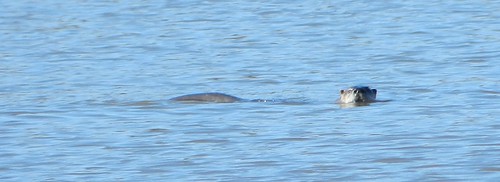
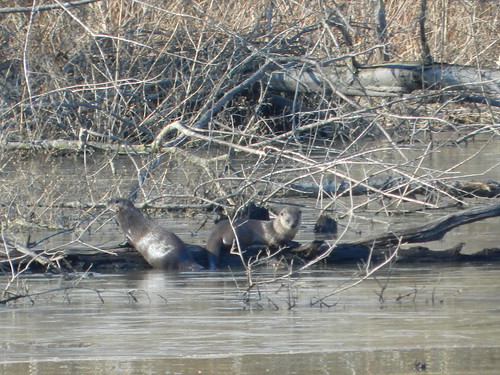
It was unseasonably warm for January, so the birds weren't really moving. I spotted a Savannah and White-crowned Sparrow. Not much else of interest. I proceeded to the auto tour route. The place was slow bird wise, so we stopped at the first pond we came to. There was an observation platform, so we got out of the car and walked around. We immedialty saw some movement on the ice. River otters!! Three of them.
The birding has been kinda slow for me locally. Since my girlfriend's favorite animal is the otter, I tried to think of a place to find them. I have read reports of many being seen at Muscatatuck National Wildlife Refuge in Seymour, Indiana. I have also heard that the birding is stellar there, and I have never been there before, so.
After a two hour drive, I arrived at Muscatatuck. I was surprised at the size of the place, as I was envisioning a different kind of place. That being said, the place looked awesome to see some cool birds.
It was unseasonably warm for January, so the birds weren't really moving. I spotted a Savannah and White-crowned Sparrow. Not much else of interest. I proceeded to the auto tour route. The place was slow bird wise, so we stopped at the first pond we came to. There was an observation platform, so we got out of the car and walked around. We immedialty saw some movement on the ice. River otters!! Three of them.
They were catching fish under the ice. I has been a very long time since I have seen river otters. I remembering seeing them often when I was a kid while fishing. The last one that I saw in Ohio was deceased. They are very rare in Ohio. These otters have been reintroduced at Muscatatuck.
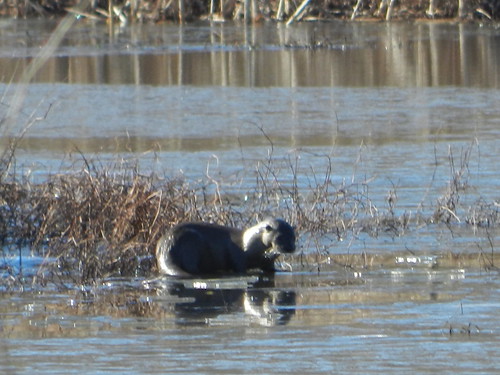
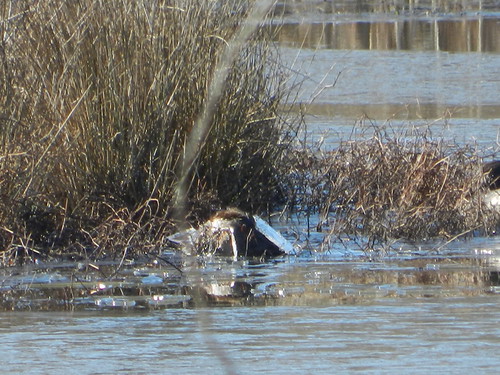
Here is an otter breaking trough the ice.
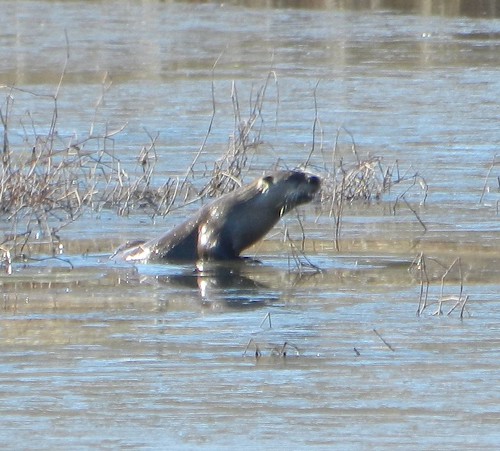
There were otters in almost every pond that we stopped at. They were at first very curious to our presence, but after a while they started to retreat for cover.
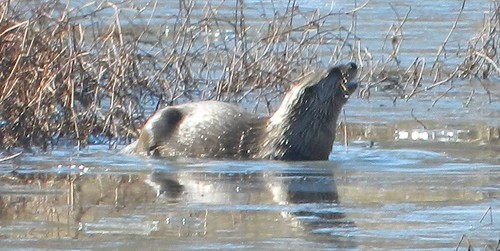
The one swimming above was very curious of my girlfriend and swam up very close to her.
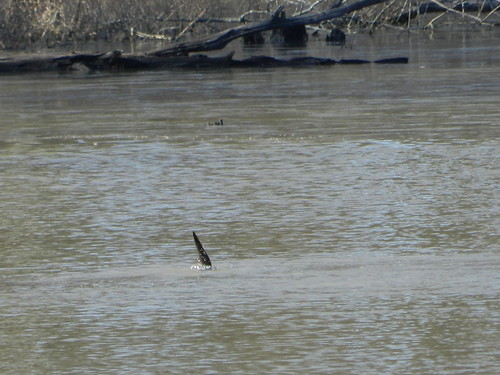
Otters are just as hard to photograph as birds. Here is a otter tail, as I missed the dive.
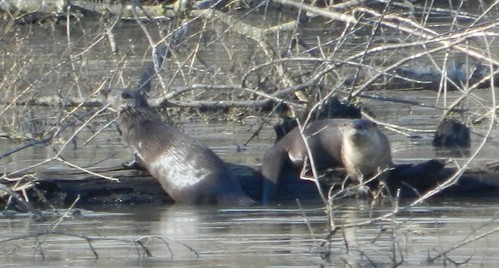
You can almost see the disapproval of being watched on the one otters face.
Watching the otters was a different experience. I enjoyed watching them as much as I do watching birds. Brought back memories of when I was younger. I remember otters, barn owls, and bobcats. Things are not the same.
Since this is a birding blog, it wouldn't be right not to have some birds here. Even though the birding was slow, I did manage to see some good birds.
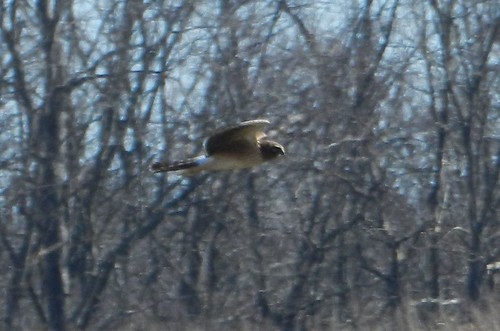
Here is the first raptor seen on the auto tour. A far away Northern Harrier.
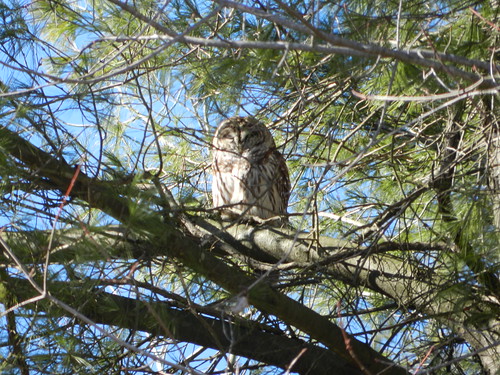
We saw two of them. I also spotted this Barred Owl sitting in a tree sleeping on the side of the road.
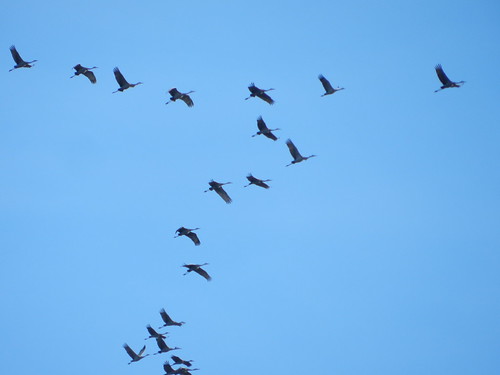
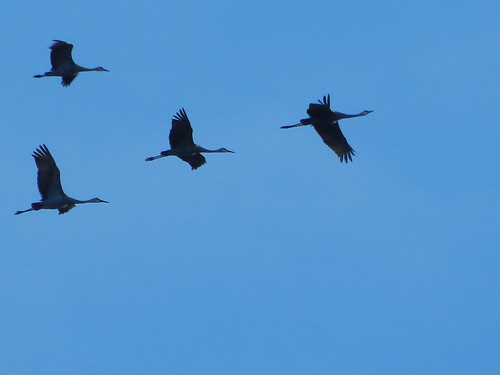
As the sun started to set, we saw thousands of Sandhill Cranes coming into the south closed area of the preserve. I am not too familiar with the area, so I couldn't get that close to see where they were landing.
Love the sound and sight of sandhills! It was a very much needed help to my recovering from the flu.
As I write this post, the temps are falling quick. The coldest it has been in a few years here. Hoping as the ice forms up north, it pushes some good birds down!
Save the Birding Dates!
Posted by
Unknown
Please join BirdingIsFun.com, the American Birding Association, and the Pledge to Fledge initiative by inviting someone to go birding with you on the following dates in 2013:
April 25th - April 29th - Pledge to Fledge
"P2F is an international grassroots campaign to introduce friends and acquaintances to the vibrant pursuit and observation of wild bird species. It is a terrific opportunity to share your love for birding with others, and to help people discover the allure of birds while connecting with the natural world around them."
May 24th - May 27th - Common Nighthawk Weekend #1
Aug 30th - Sept 2nd - Common Nighthawk Weekend #2
Introduce a friend the joy of birding by going out in search of the 2013 ABA Bird of the Year, the Common Nighthawk. And of course enjoying all the birds you see and hear while you are at it. The ABA is taking advantage of Spring and Fall migration with two separate weekends.
Tips on Inviting Not-Yet-Birders to Go Birding
April 25th - April 29th - Pledge to Fledge
May 24th - May 27th - Common Nighthawk Weekend #1Aug 30th - Sept 2nd - Common Nighthawk Weekend #2
Introduce a friend the joy of birding by going out in search of the 2013 ABA Bird of the Year, the Common Nighthawk. And of course enjoying all the birds you see and hear while you are at it. The ABA is taking advantage of Spring and Fall migration with two separate weekends.
Tips on Inviting Not-Yet-Birders to Go Birding
- The Golden Rule is "Do unto others as you would have them do unto you." The Golden Rule of Sales is "Sell unto others as they would be sold unto." In our context, this suggests that we invite someone to participate in birding in such that we know they will have a good time. A big day, from midnight to midnight, running around the countryside like a man possessed chasing every last bird would probably only appeal to very few individuals in the world. However, inviting a neighbor to walk their dog with you while you point out the birds might be a simple way you can introduce someone to birding. Perhaps you have a co-worker that loves photography...invite them out one those days during one of those weekends to do some bird photography.
- Don't be greedy with your good optics. Make sure your guest has the better of the optics you own to maximize their enjoyment of their first birding experience. I know it's tough, but you can get by using your old pair of binoculars for a little while, and you might even enjoy some bare-naked birding. Oh, and without being condescending, teach them how to use the optics too. I'm always amazed at how many people don't really know how to use binoculars...and then I remember that I didn't even know how prior to getting into birding.
- Minimize sensory overload. Some birding locations may have too much bird activity going on that it can overwhelm a beginning birder. As long as you are just showing them the spectacle it'll probably be okay, but if you're trying to sort through every last species you'll likely bore or exhaust your guest. Often a city park or a hiking area has sufficient habitat to see plenty of bird species without causing sensory overload.
- It seems that most people generally appreciate the big birds like hawks, owls, eagles, herons, egrets, and cranes. Because they are easier to see and identify that may be an avenue for introducing someone to birding. At the same time, let's not pass up the opportunity to show-off the amazing colors and beauty of the smaller song birds. Seeing something that most people walk right past and recognizing that you've been missing out on something is also an effective way to hook someone on birding. It worked for me!
- Citizen Science, like eBird may also be what motivates someone to be a birder. Knowing that you are part of something bigger than yourself is a wonderful thing.
- If you have the energy and ability, consider planning and publicizing a community event at a local nature center, park, or other bird-rich area.
![]() |
| This scene may cause sensory overload for new birders |
Sunday, January 20, 2013
Just Ducky! A Feathered Forecast
Posted by
J. Drew Lanham
I don't know about you but I don't watch the weather for how I might need to dress on any given day. No, I tune in at 6:15 each night to see what the local weather-guesser guy or gal has to say about the fronts and storms that might deposit new feathered fallout in my neck of the woods. This past week the weather was fit for neither man nor beast! Well, most beasts-- The low pressure system that sat like a fat brooding drooling bear over the southeast and the frigid weather that froze over the northern tier like the next glaciation, combined forces to push waves of waterfowl further south. Having experienced perhaps the worst duck numbers on a Christmas Bird Count I can remember since 1985, I was happy to finally see my fast-flying, web-footed friends falling from the heavens to flavor the local wetlands and the New Year.
And so with the skies darkened and the rain falling for most of last week I thought I'd take a few moments to pay homage to the ducks and the birder-hunters who pursue them passionately. I'm not sure there are any other sportsmen that love their quarry and give to conservation like waterfowlers do. Yes, the history of waterfowling is a storied and sometimes sad one with absurdly large - bored punt guns and market hunting decimating populations of many species, waterfowlers were more nefarious than anything. With hundreds of ducks falling to a single shot and no laws to limit the wanton killing, canvasbacks and many other species declined to such low levels that extinction became a distinct possibility. The "good ol' days" of killing with no limit over the chilly Chesapeake or some South Carolina backwater weren't so good. Something needed to be done or other species would follow the Labrador duck to "Never-Ever-Again Land". The key thing about history is knowing it so you won't repeat it, right?
And so there were those who paid attention. Folks like Teddy Roosevelt, George Bird Grinell and cartoonist Ding Darling wanted things to change and put political will, money and even the pen to work. They saw waterfowl not only as beloved quarry but as beautiful birds that connect the continent--North to South and East to West in wetlands beset with whistling wings and the clamor of quacking. The first half of the twentieth century saw legislation--the Lacey Act of 1900, the Federal Migratory Bird Act of 1918, and The Duck Stamp Act of 1934 enacted on behalf of all wildlife. Then the Federal Aid in Wildlife Restoration Act (better known as Pittman -Robertson), enacted at the tail end of the Great Depression, made sure that many of those who used the resource paid their way. With taxes levied on firearms and ammo, money went back to the states to restore decimated wildlife populations. Make no mistake, birds provided much of the impetus or the change. Among all bird species, waterfowl waddled in front as emblematic leaders in the push to conserve.
We all know (or should know by now) how important waterfowl and modern waterfowlers have been in generating dollars through duck stamp purchases and the wetland management initiatives they support. Dollars in the name of ducks are counted in the billions and acres of wetlands protected in the millions. The efforts not only help ducks but a myriad of other critters- feathered, furred and finned that you and I enjoy. And so I raise my binoculars to the ducks and the people who pursue them!
There is so much rich legacy that waterfowlers have given us. I love (most of) the colorful and descriptive names given to waterfowl by duck hunters. Everyone knows what a "greenhead" is. The avian aliases often impart a different flavor to the birds and in many instances helps us to know them even better.
And yes you read me right earlier! I am declaring duck hunters as fellow birders! Think about it. Most waterfowlers are incredible observers who will awe you their ability to identify waterfowl at tremendous distances -- often in the limited light of dawn or dusk; and in bad weather--without binoculars. It is gestalt birding at its best! In some states one must pass proficiency tests in order to gain hunting privileges. What's more their love of the birds they hunt leads them to know more about the ecology of their quarry than most other birders I know. Mad props to those who pursue and leave much more intact than they take home in the game bag!
I thought of all of this as the rain came down in sheets last week. It rained and it poured. And then it rained and it poured some more--for five straight days. With the pitter-patter of precipitation rhythmically pounding outside, I was inspired to turn my attention to the feathered creatures that probably appreciate it most. And so here it is--my meteorological musings --an ode to the waterfowl and the birders and waterfowlers who love them. Can you match the hunter names to the dandy dozen ducks in the forecast! Do you have other old names for ducks you'd like to share? By all means please do! Oh yeah. wanna do YOUR part for duck conservation? Buy a stamp! My good friend and birder-conservationist Paul Baicich passionately preaches the "Put-your-money-where-your-mouth-is-birders-and-buy-a-duck-stamp!" message on a daily basis. I'm a believer and a duck stamp buyer. You should be too! Put in! It's the best $15 you'll spend!
The Feathered Forecast--
And so with the skies darkened and the rain falling for most of last week I thought I'd take a few moments to pay homage to the ducks and the birder-hunters who pursue them passionately. I'm not sure there are any other sportsmen that love their quarry and give to conservation like waterfowlers do. Yes, the history of waterfowling is a storied and sometimes sad one with absurdly large - bored punt guns and market hunting decimating populations of many species, waterfowlers were more nefarious than anything. With hundreds of ducks falling to a single shot and no laws to limit the wanton killing, canvasbacks and many other species declined to such low levels that extinction became a distinct possibility. The "good ol' days" of killing with no limit over the chilly Chesapeake or some South Carolina backwater weren't so good. Something needed to be done or other species would follow the Labrador duck to "Never-Ever-Again Land". The key thing about history is knowing it so you won't repeat it, right?
And so there were those who paid attention. Folks like Teddy Roosevelt, George Bird Grinell and cartoonist Ding Darling wanted things to change and put political will, money and even the pen to work. They saw waterfowl not only as beloved quarry but as beautiful birds that connect the continent--North to South and East to West in wetlands beset with whistling wings and the clamor of quacking. The first half of the twentieth century saw legislation--the Lacey Act of 1900, the Federal Migratory Bird Act of 1918, and The Duck Stamp Act of 1934 enacted on behalf of all wildlife. Then the Federal Aid in Wildlife Restoration Act (better known as Pittman -Robertson), enacted at the tail end of the Great Depression, made sure that many of those who used the resource paid their way. With taxes levied on firearms and ammo, money went back to the states to restore decimated wildlife populations. Make no mistake, birds provided much of the impetus or the change. Among all bird species, waterfowl waddled in front as emblematic leaders in the push to conserve.
We all know (or should know by now) how important waterfowl and modern waterfowlers have been in generating dollars through duck stamp purchases and the wetland management initiatives they support. Dollars in the name of ducks are counted in the billions and acres of wetlands protected in the millions. The efforts not only help ducks but a myriad of other critters- feathered, furred and finned that you and I enjoy. And so I raise my binoculars to the ducks and the people who pursue them!
![]() |
| The first duck stamp. The beginning of a conservation success story! |
And yes you read me right earlier! I am declaring duck hunters as fellow birders! Think about it. Most waterfowlers are incredible observers who will awe you their ability to identify waterfowl at tremendous distances -- often in the limited light of dawn or dusk; and in bad weather--without binoculars. It is gestalt birding at its best! In some states one must pass proficiency tests in order to gain hunting privileges. What's more their love of the birds they hunt leads them to know more about the ecology of their quarry than most other birders I know. Mad props to those who pursue and leave much more intact than they take home in the game bag!
I thought of all of this as the rain came down in sheets last week. It rained and it poured. And then it rained and it poured some more--for five straight days. With the pitter-patter of precipitation rhythmically pounding outside, I was inspired to turn my attention to the feathered creatures that probably appreciate it most. And so here it is--my meteorological musings --an ode to the waterfowl and the birders and waterfowlers who love them. Can you match the hunter names to the dandy dozen ducks in the forecast! Do you have other old names for ducks you'd like to share? By all means please do! Oh yeah. wanna do YOUR part for duck conservation? Buy a stamp! My good friend and birder-conservationist Paul Baicich passionately preaches the "Put-your-money-where-your-mouth-is-birders-and-buy-a-duck-stamp!" message on a daily basis. I'm a believer and a duck stamp buyer. You should be too! Put in! It's the best $15 you'll spend!
The Feathered Forecast--
Rain
Draining the broody sky in torrents.
precipitation pumping ponds and puddles past full.
The rivers are roaring and flocks of ducks are boiling.
Redheads, Bluebills and Greenheads will fall heavily from the clouds to find the failing freshets refilled.
Sprig, Spoonies and Summer Ducks will sprint through the showers and the tiniest smiler Teal will squeal in the torrent to the deluge's delight.
Gray ducks love the gads of rain too.
The Specks won't give a heck if it rains from now until.
The Baldpate and Butterballs should bobble ebulliently on rising waters and word is that the Cans can't get enough and proclaim it to be a drearily dreamy ducky day.
Happy Birding Y'all!
Drew
Happy Birding Y'all!
Drew
Saturday, January 19, 2013
Fun with some Utah winter birds
Posted by
Mia McPherson
![]() |
| Juvenile Rough-legged Hawk |
![]() |
| American Coot walking on snow-covered ice |
![]() |
| Adult Bald Eagle landing on the frozen Bear River |
![]() |
| Calling Chukar in fresh snow |
![]() |
| Golden Eagle that was too close! |
![]() |
| Great Blue Heron lift off |
![]() |
| Juvenile Black-crowned Night Heron |
![]() |
| Male Ring-necked Pheasant |
![]() |
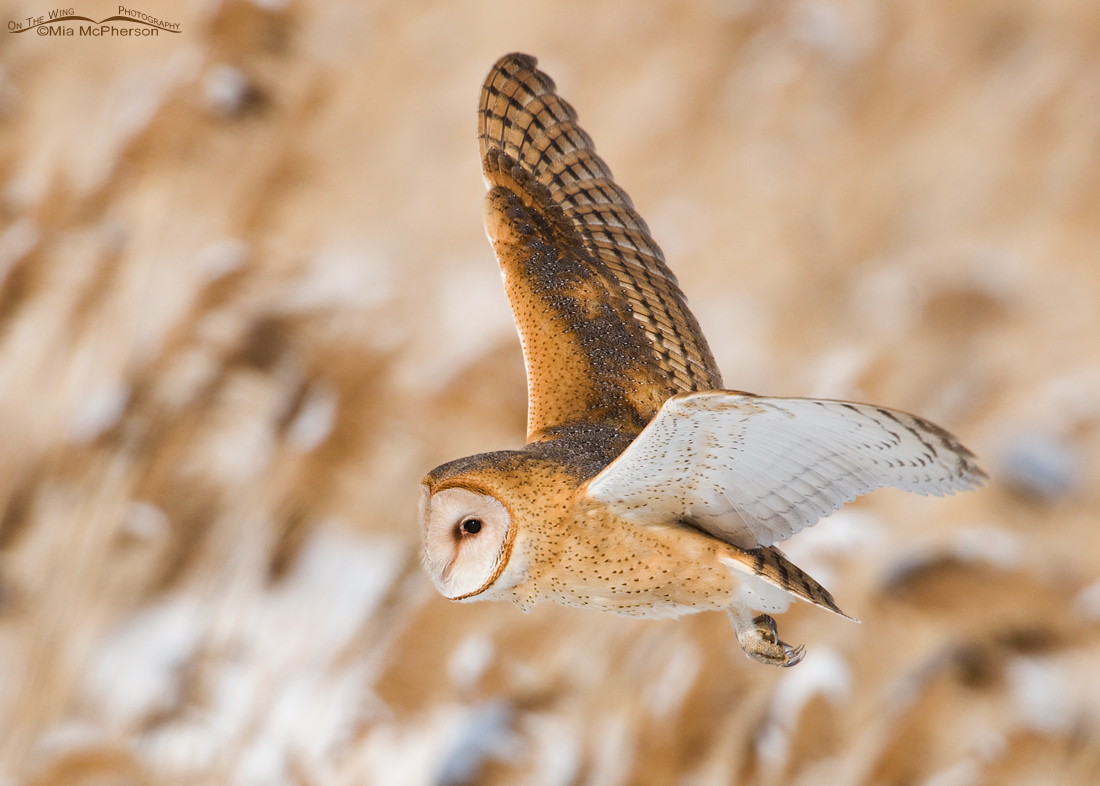
| Barn Owl in flight |
It sure has been fun to photograph these Utah birds this winter and it isn't over yet!
Mia
OnTheWingPhotography
Friday, January 18, 2013
Big announcement from the Stokes
Posted by
Unknown
Western and Eastern editions of the Stokes field guide. Read about it here!
I demand a photo! ...generally speaking
Posted by
Unknown
| Sharp-tailed Sandpiper, 3rd Idaho record. Multiple birders got to see them and photograph them. |
Back in the day, a new record bird only counted because they had a skin in the hand. The naturalist had skillfully plucked that bird out of the air with a shotgun. Then with the advent of binoculars and bird guides a new craft emerged...the skill of field identification and note taking. Technology has advanced and digital photography is now widespread and super convenient. Almost all of us have a digital camera in one form another, be it your cell phone, an inexpensive point and shoot, or a professional quality dSLR. Digital photographs seem to be the heir-apparent to skins and notes.
![]() |
| Long-tailed Jaeger, another Idaho vagrant wherein photos aided in establishing its identity. |
Frankly, I don't trust other people's notes. Who knows for sure when and where those notes were written. Were they copied out of a field guide or at least influenced by the field guide as the birder convinces him/herself after the fact of what species they saw? I suppose one could logically carry that same concern into the world of digital images of a bird...were the photos really taken where the birder said they were taken? Pretty much all of the new cameras, even phone cameras, are geo-tagging the images, so that helps us overcome the location question.
Because of the ease of communication we are able to get many more birders onto a rare bird. Because of the ease of digital photography we are able to get many more images of birds. And because of those images we get more birders excited to go see birds. Because we get more eyes on the rare birds and usually multiple images of them we get more accepted new records. So, when it comes to new bird records, while I'd be excited by someone's notes and report and I'd probably chase it, I still want to see a photo, even if I have to get it myself.
What do you think?
![]() |
| Northern Parula seen in winter in Boise. Several people had seen it before me, but my photos excited many more birders to go and see it and the record was easily accepted. |
Subscribe to:
Comments (Atom)