Thursday, February 14, 2013

Winter Irruptions

Watching birds can do lots of good things for you, including expanding your vocabulary. Or at least, it has expanded my vocabulary. Until I had the time to pay attention to seasonal changes and movements of birds, I did not have the word, “irruption,” in my working vocabulary. I knew “eruption,” which involves something bursting out, like lava from a volcano. Irruption refers to something bursting in, or surging up. It is the word used by ecologists to describe a sudden, rapid, and irregular increase in an animal population. It typically involves some kind of change in the natural ecological checks and balances.

In the bird watching world, irruptions are hoped for events, especially as winter imposes its grip. Winter birding can be rather monotonous - the same old, same old, unless one or more irruptions occur. “Bird Source,” the website of National Audubon and Cornell Lab of Ornithology, puts it this way: “Every winter, bird watchers across North America anxiously await the possible incursion of birds that don't normally winter in their areas. These periodic bird irruptions add a dramatic level of excitement to winter birding.”

Snowy Owl - Brattleboro, Dec, 2011

Last winter (2011-12) was an irruptive year for Snowy Owls. These large arctic predators were reported in record numbers across the northern states, often in places where they have rarely, or never, been reported. Sightings extended deep into the Great Plains and even as far south as Texas. The Snowy Owl irruption was driven by a crash in the lemming population in the Arctic; the lemming is the owls’ principal food source.

When a Snowy Owl was reported in mid-December, 2011, in the corn field behind the marina in Brattleboro, the word spread quickly through the birding community. Within an hour of the first report, a dozen birders were focusing their scopes on the white object among the corn stalks. More observers followed in a steady stream.

Finch species which inhabit the northern forests are the most common irruptive birds, and this winter has been a banner year in our area. During October, large flocks of Pine Siskins (closely related to the American Goldfinch) moved through New England and the mid-Atlantic states. The flocks which visited my bird feeders numbered 200+; they put a serious strain on my bird seed budget.

Common Redpoll have irrupted in New England this winter

The siskin flocks moved on, to be followed by the Common Redpolls (also closely related to goldfinches). Throughout December and January, and on into February, there have been breathless reports about the sudden appearance of these small finches.

What makes the winter irruptions both exciting, and frustrating, is their unpredictablility. As the birds irrupt into New England, they do so in flocks - often large and typically very nomadic. So you hear about all of these redpolls being seen, and you are frustrated, because you have not seen a single one. And then you are snowshoeing through an old hill farm, or walking along a frozen lane, or sitting in your kitchen watching your bird feeders, and suddenly you have a surfeit of redpolls, scratching the snow, squabbling over seed, and taking hurried flights into the hedges.

Winter finches are notorious for quickly exhausting a food source and then moving on. The epitome of this practice is the Evening Grosbeak. Long time bird feeders describe the Evening Grosbeaks’s winter presence with ambiguity. They are delighted to have these large, colorful, and handsome finches at their feeders, but they cannot avoid the additional use of adjectives such as voracious and greedy to describe their presence. This winter Evening Grosbeaks seem to have taken their blitzkrieg feeding habits further south; I have seen few winter reports from our area.
Evening Grosbeak flocks are notorious for emptying bird feeders & moving on during winter.
 The winter finches which are typically more common in our area have been hard to find this year. In addition to the siskins and grosbeaks which have moved on, Purple Finches and goldfinches are scarce.

Pine Grosbeak - Brattleboro, December, 2012

But then there are the frustrating reports of other winter finches - frustrating because you would love to see them, but they do not make it easy. For a couple of weeks in December, a flock of Pine Grosbeaks fed on the yew berries in front of Center Church in Brattleboro. There were females and young males. (The adult males apparently stayed home to defend their territory through the winter). When the berries were exhausted, the flock moved on. If you have not seen the Pine Grosbeaks, you may still have the opportunity. Be alert, because they could be anywhere. On the Christmas Count, we came across several getting grit and salt on a road in Dummerston. If you miss the Pine Grosbeak this winter, I am sorry to tell you that you may not have another opportunity for several years. But, that’s bird watching.

White-winged Crossbill (l) & Red Crossbill (r), December, 2012

On the New England coast, this has been a good winter for Red Crossbills and White-winged Crossbills. I made a trip to Salisbury Beach on the New Hampshire coast and had my best crossbill day ever.

Winter irruptions are driven by conditions in the northern forests. Scientists and naturalists in Ontario and the Maritime Provinces have been studying the preferred food sources of various species for years. Based on their collected data, fairly accurate predictions are possible about which species will irrupt. When they document the shortage of a food that a particular species prefers, they predict an irruption. Winter survival depends upon getting enough food. When local food sources are scarce, the birds go elsewhere.

Red-breasted Nuthatch

Finches are the most common irruptive species during winter, but not the only ones. It is easy for us to miss an irruption of the Red-breasted Nuthatch, since this species also nests in the higher elevations of our area and may be seen year-round. Harder to miss when you come across them are the Bohemian Waxwings. When you find Bohemians among the flock of their cousins, the Cedar Waxwings, then you have counted a coup among bird watchers. And when you meet a waxwing flock dominated by Bohemians, you have certainly encountered evidence of an irruption. And, you will be breathless.


Bohemian Waxwing, Putney, 2011
For any of these winter irruptions, I have two pieces of advice if you are not a hard core birder: First, I am sorry to say, don’t hold your breath. The winter flocks are nomadic and erratic. Hard core birders sometimes spend days trying to chase them down, not always successfully. Second, when you do stumble on one of these flocks, or when one of these flocks stumble on you, don’t forget to breathe!

Good birding!

Chris Petrak - Tails of Birding

Wednesday, February 13, 2013

Eagle Fest Wisconsin!

Eagle Fest Wisconsin!

Wintertime in Wisconsin can be rough, even very rough at times, but we all look forward to the wintering birds and the excellent pictures we get. The Bluebirds and Blue Jays, the Cardinals and the sometimes hard to photograph Dark-eyed Juncos as they scurry around in the snow, but the Eagle is the one bird we all can agree we can't wait to see come down from their Summer homes in the North. 

Bald Eagle over the Wisconsin River

Photographers flock to the Wisconsin & Mississippi Rivers in bunches each year to watch the Eagles do their acrobatic dance over the icy water. Because of that, Eagle festivals pop up all over the place, and bring in the casual and the not so casual photographers and their families.  

Bald Eagle on the banks in Sauk City

One of my favorite Eagle festivals is The Ferry Bluff Eagle Council Eagle Days, in Sauk Prairie that's normally held in early January each year. This year the event was held on January 18 & 19, 2013. Details of the event can be found here.

Juvenile Bald Eagle flying over the banks in Prairie Du Sac

Of course you don't have to go to a festival to enjoy Eagle watching. This time of year just head to the banks of the Wisconsin and Mississippi Rivers and wait.  You're bound to see these avian wonders fly by.  One of my favorite places is the Sauk Prairie area that encompasses the towns of Sauk City and Prairie Du Sac, off the west banks of the Wisconsin River, 30 minutes north outside of the Madison area.

Bald Eagle searching for food.

Another great location is the amazing Devil's Lake area, one of the most beautiful  and photographed state parks in Wisconsin.  Devil's Lake was originally a gorge of the Wisconsin River, and as the glacier receded it created this amazing lake. The moraine deposited hills are a perfect place to see Eagles as they soar down and try to capture fish. You will almost always see some sort of bird of prey flying over trying their luck on the lake. 
Bald Eagle takes off on the banks of Devil's Lake State Park

Bald Eagle ready to capture a bit of lunch

Well that's it for this month from the wintry state of Wisconsin. As always, if you want to see more of my work please check out my blog at Ricky L Jones Photography Blog, or you can find me at Flickr, Google Plus  Facebook and please follow my Twitter at @RLJSlick.


Tuesday, February 12, 2013

Going Coastal for Razorbills!

Sunday, I finally got the chance to go coastal to look for Razorbills. Indian River Inlet is the hotspot for Razorbills in the state of Delaware and quite a few have been seen over the past couple of months during what is certainly an aberrant movement to southerly waters. I picked up Alan Kneidel in Dover and we drove an hour and a half to the inlet drooling over the hoards of Snow Geese lining Highway 1. We casually scanned the flocks that were close to the road and Alan picked out this drive-by Ross's Goose:

Ross's Goose along Church Rd. in Sussex County, Delaware on 10 February 2013. Note the neck-banded Snow Goose behind the Ross's that we failed to notice when watching this bird. Photo by Tim Schreckengost.
We got to the inlet around 8:30 and immediately drove through the campground picking up 53 Snow Buntings. We made our way to the seawatching spot, which is the south side of the inlet. There were plenty of Black and Surf Scoters, Long-tailed Ducks, and loons loafing around the jetties.

Long-tailed Ducks at the Indian River Inlet on 10 February 2013. Photo by Tim Schreckengost
Thirty minutes passed and we finally had a lone Razorbill fly in and then out shortly after providing a short, but satisfactory look. Another few minutes passed and up to three flew in and then out again. The Razorbills were only sitting for thirty seconds, max. I went looking for other ducks in the inlet and was pleased to find this cooperative bird within phoneskoping distance:

One of at least five Razorbills present at the Indian River Inlet on 10 February 2013. Photo by Tim Schreckengost.
The bird hung around for at least ten or fifteen minutes allowing for this video as well:


Eventually, it had to leave providing an awesome sequence of in flight, but somewhat out of focus shots! (If anyone would like to make a composite image from any of these photos, I would greatly appreciate it!)


If you're unfamiliar with the Phone Skope, check out Robert's review here: http://www.birdingisfun.com/2012/12/review-phone-skope.html

The video, Long-tailed Duck photo, and the first Razorbill shot were both taken with the iPhone 4s Phone Skope adapter and Vortex Skyline 80 Spotting Scope.

Until next time, bird hard my friends.


Monday, February 11, 2013

Ten most misidentified birds in the Pacific Northwest

DON'T READ THIS SENTENCE! I remember learning to read. But I can't look at words and NOT know how to read now. Likewise, many experienced birders can't really know how hard it is for beginners to identify some birds that we now know instantly and subconsciously.

I wanted to create a series of identification articles. No, not immature gulls and Empidonax flycatchers. These groups are truly hard. But what fairly common birds or species pairs do birders in the Pacific Northwest have trouble with? I can't always ask them, because they may not even know  they are making an ID error. That's the focus of this post, not necessarily hard-to-identify birds, but most-misidentified. The distinction is subtle, but important. Many hard-to-identify birds are hard because they are rare enough in the Northwest that birders don't get much experience with them. Many of the birds on the following list, however, are common birds, but misidentified none-the-less.

In the past I tackled a few of these already on my blog. The separation of Greater and Lesser Yellowlegs is certainly a challenge for some. Ruby-crowned Kinglet versus Hutton's Vireo is easy--once you know the tricks of what to look for. Another frequent "easier" ID challenge is Horned and Eared Grebe separation. Canada Goose or Cackling? This still has some more experienced birders unsure. Never heard of Cassiar Junco? Then you are probably misidentifying them as Slate-colored Juncos. More recently I addressed a problem common to local Christmas Bird Counts--winter Western Sandpiper and Dunlin.

So a few weeks ago I sent out an email to several experienced birders throughout different areas of the Pacific Northwest to ask them what 10 species, or so, are giving birders in their area trouble. I got responses back from 5 including, providentially, a less experienced birder I had not approached. [Words of wisdom: any private email about birds that you send out has a good chance of accidentally getting cc'd to the local bird mailing list and going viral.]

My personal list, not counting the challenges written about above, was 30 bird ID problems. Chuck Gates in central Oregon sent a list of 45 birds. Steve Shunk, also in central Oregon, stuck to 10 birds. Charlie Wright in Washington mentioned 9 specific challenges, some additional general groups, and some problems with bird song or call confusion. Robert Mortenson gave me his perspective from Idaho and Utah with a list of 11. And Richard Leinen in the Portland area gave me 13 that still give him some problems. All told, 118 challenges from 6 persons. Would you believe that 70 different ID challenges were mentioned? Yes, these six birders mentioned 60% unique ID challenges!

Here, then, is a countdown of the most misidentified birds in the Pacific Northwest, along with some comments about what might make them such a challenge to identify.

Most misidentified Pacific NW birds #10-5

Garnering mentions on 3 of 6 lists are the following common ID challenges.

Cassin's Finch

#10 House, Purple, and Cassin's Finches

Very similar, especially Purple and Cassin's. Fortunately, range and habitat helps separate them. Unfortunately, many birders aren't as familiar with status and distribution as they could be--it's as important as learning molt and parts of the birds.

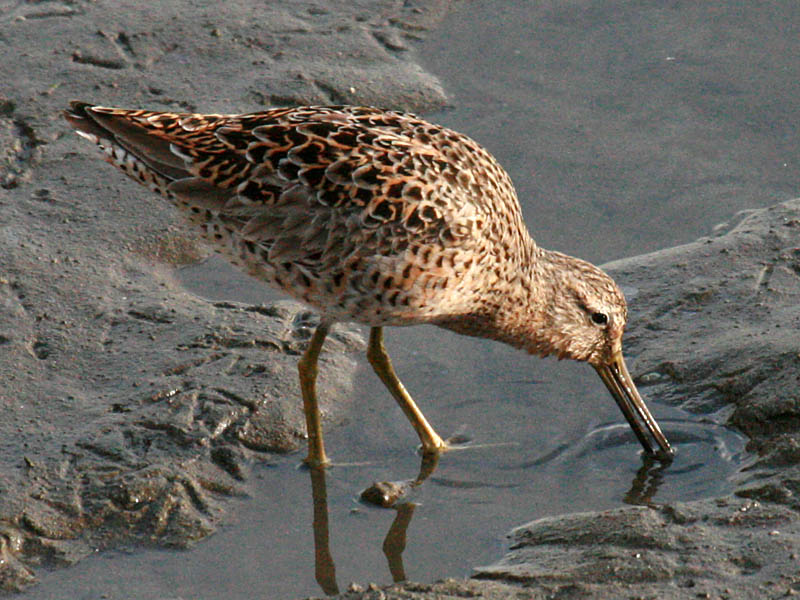
Short-billed Dowitcher

#9  Short-billed and Long-billed Dowitchers

These are truly difficult, with complex patterns requiring intimate knowledge of plumage terminology and placement: tertials, wing coverts, secondaries. As with many shorebirds, ID is complicated by separate and long-held juvenile, breeding, and non-breeding plumages.

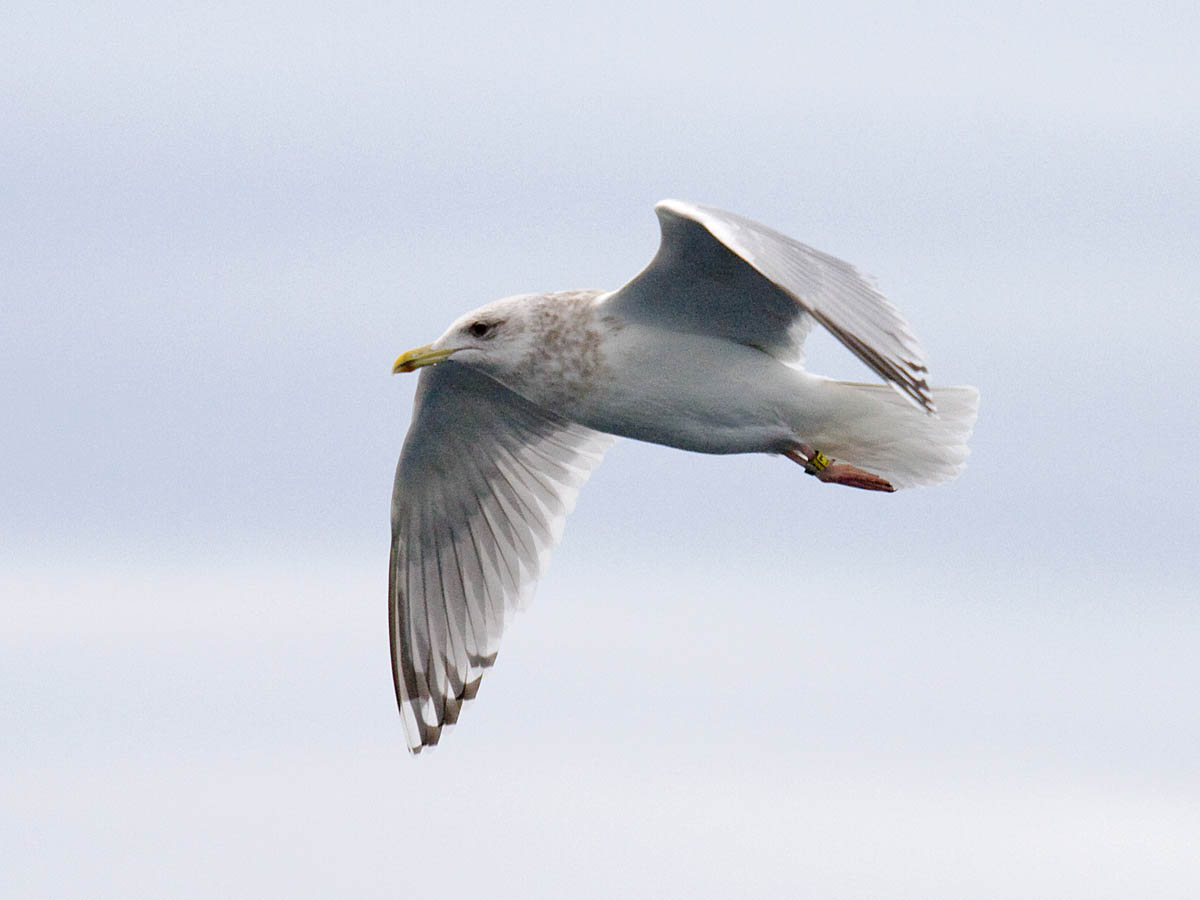
Thayer's Gull

#8 adult Herring and Thayer's Gull

Subtle shape differences of the bill and head aren't as clear-cut as would be more traditional field marks on these similarly colored birds. It doesn't help that abundant hybrid Western x Glaucous-winged Gulls can show basically identical wing tip patterns of Thayer's. Richard Leinen echos many birder's lament: "Thayer's are a mystery to me."

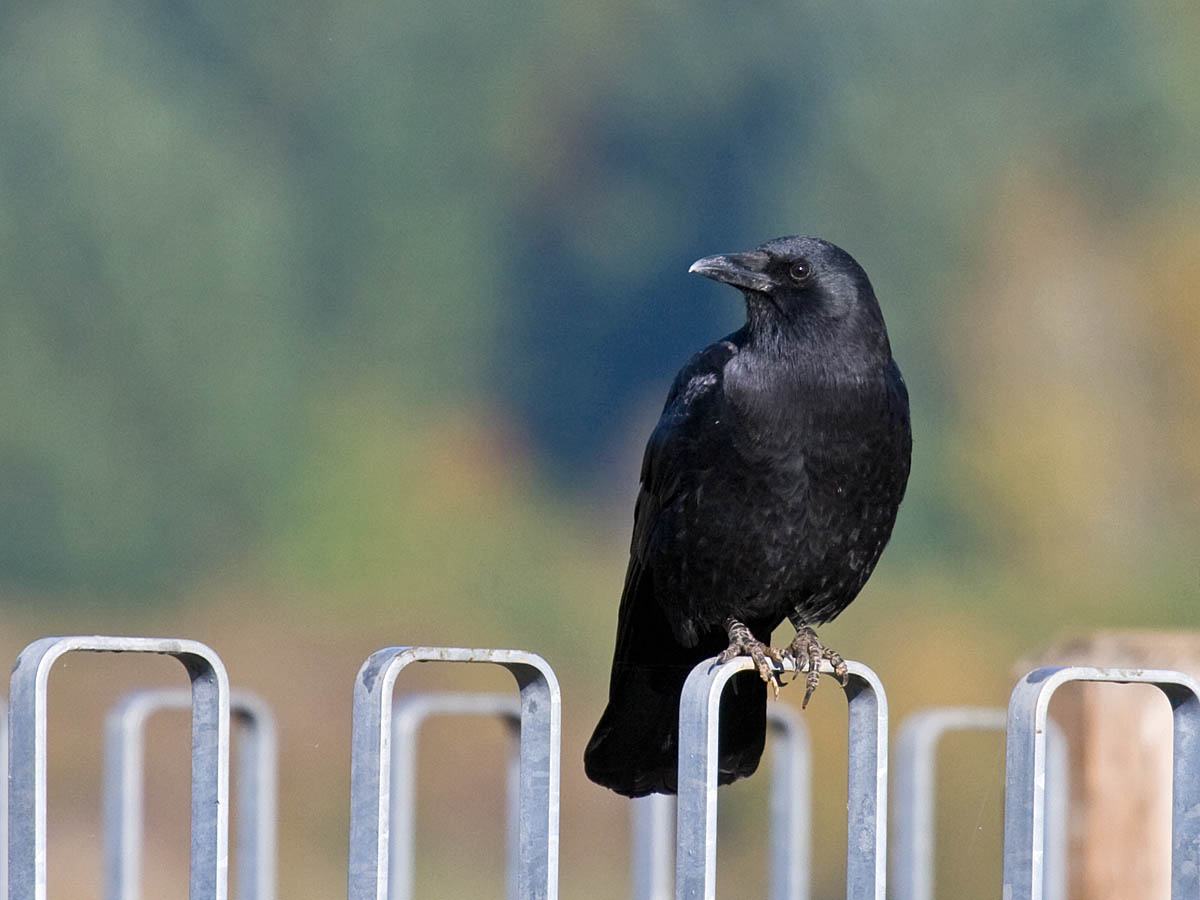
American Crow

#7 American Crow and Common Raven

Unlike shorebirds and immature gulls, it is the lack of pattern that causes a problem for many birders. Flight style differences make identification at a distance easy once learned, but birders don't have a vocabulary for this method of ID.

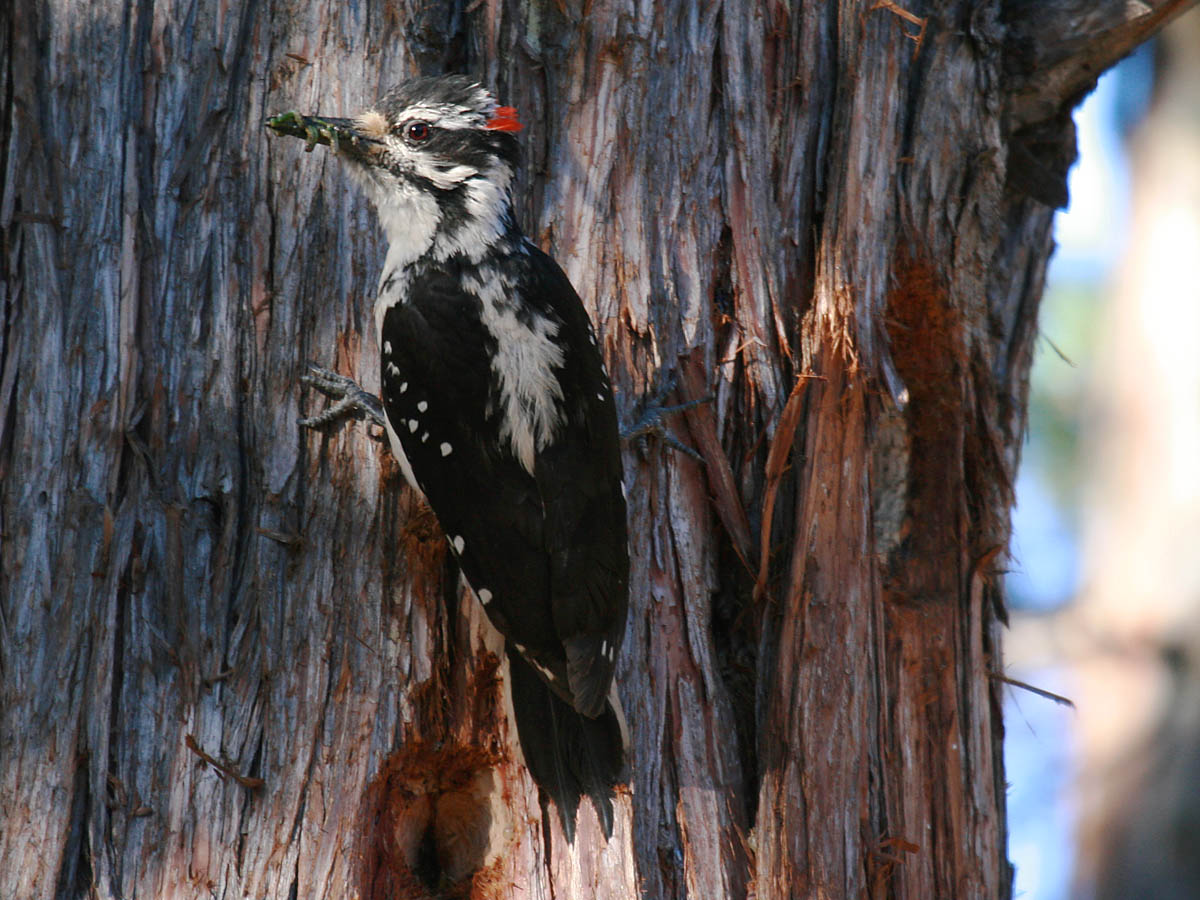
Hairy Woodpecker

#6 Downy and Hairy Woodpeckers

Identical pattern and not much different in size. The relative length of the bill can help, unless forehead feathers are worn and damaged from digging nest cavities.

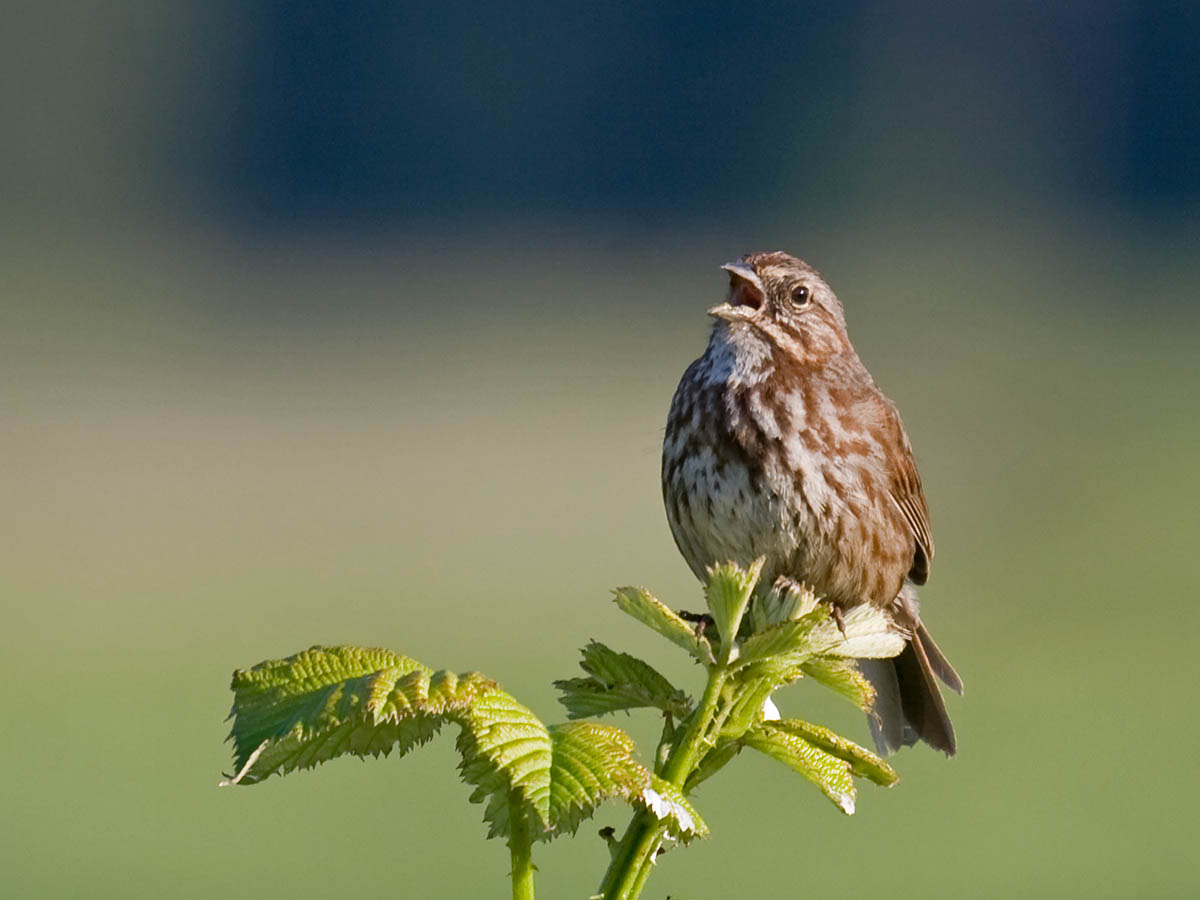
Song Sparrow

#5 Song Sparrow as something else

Charlie Wright wrote, "Sparrows are amazingly tough for people, especially visiting birders from the East. Our Song Sparrow subspecies just beg to be called Fox Sparrows, Swamp Sparrows, even Lincoln's Sparrows, apparently just because they're so different from East Coast birds." He also notes another problem for eBird reviewers: "Summer Lincoln's and Fox Sparrows are not flagged [by eBird automatic filters] in counties where they breed in the mountains, yet people continuously report them in urban and lowland areas throughout the summer.

Most misidentified Pacific NW birds #4-2

The following 3 identification challenges each were mentioned on 4 out of 6 lists.

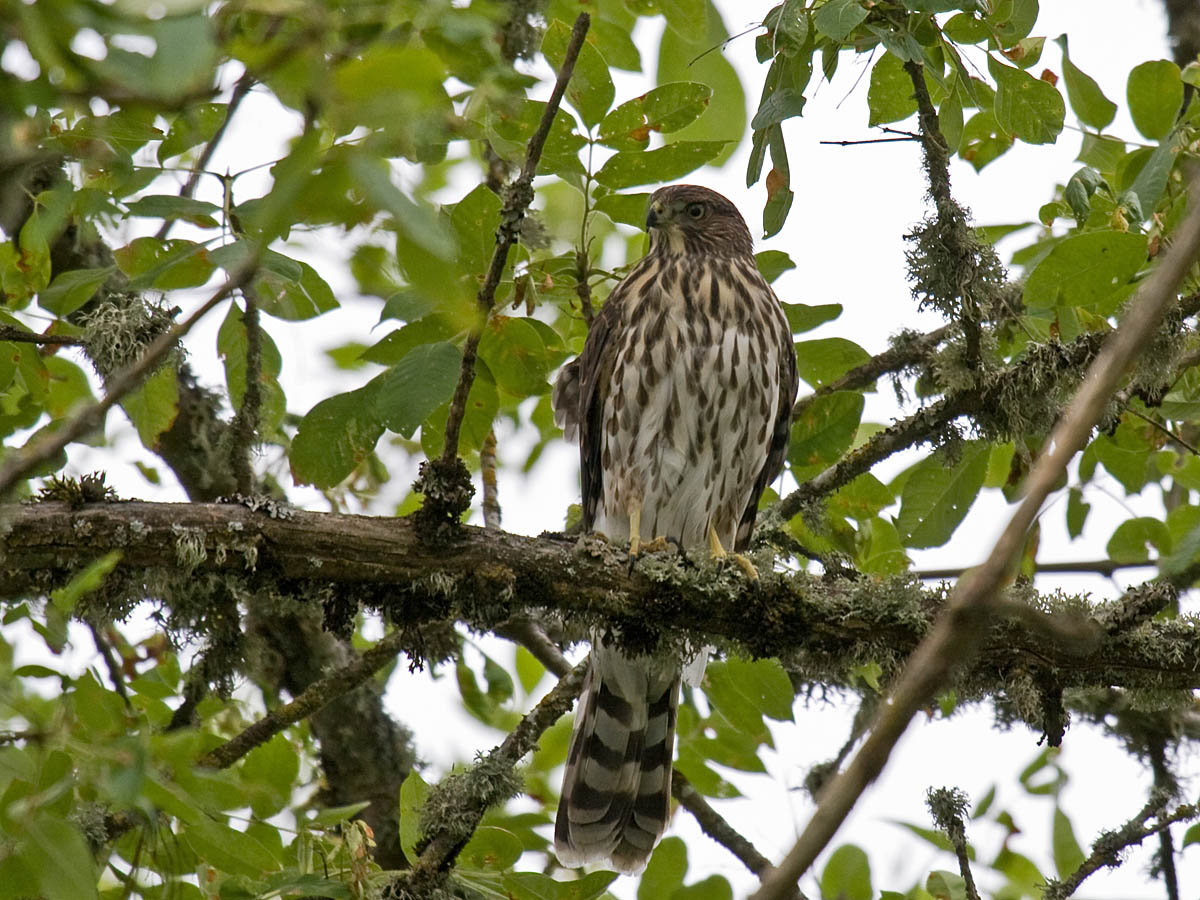
Cooper's Hawk

#4 Sharp-shinned and Cooper's Hawks and Northern Goshawk

This is a perennial identification problem despite the many highly detailed ID guides and articles. When looking at a perched bird, rather than trying to gauge the relative size of the eye to the rest of the head, look at the front of the tarsus and remember how the Sharp-shinned Hawk got its name.

American Goldfinch

#3 American and Lesser Goldfinches in winter plumage

Such a bright bird distracts one from looking at the tell-tale under tail coverts. Learn the calls.

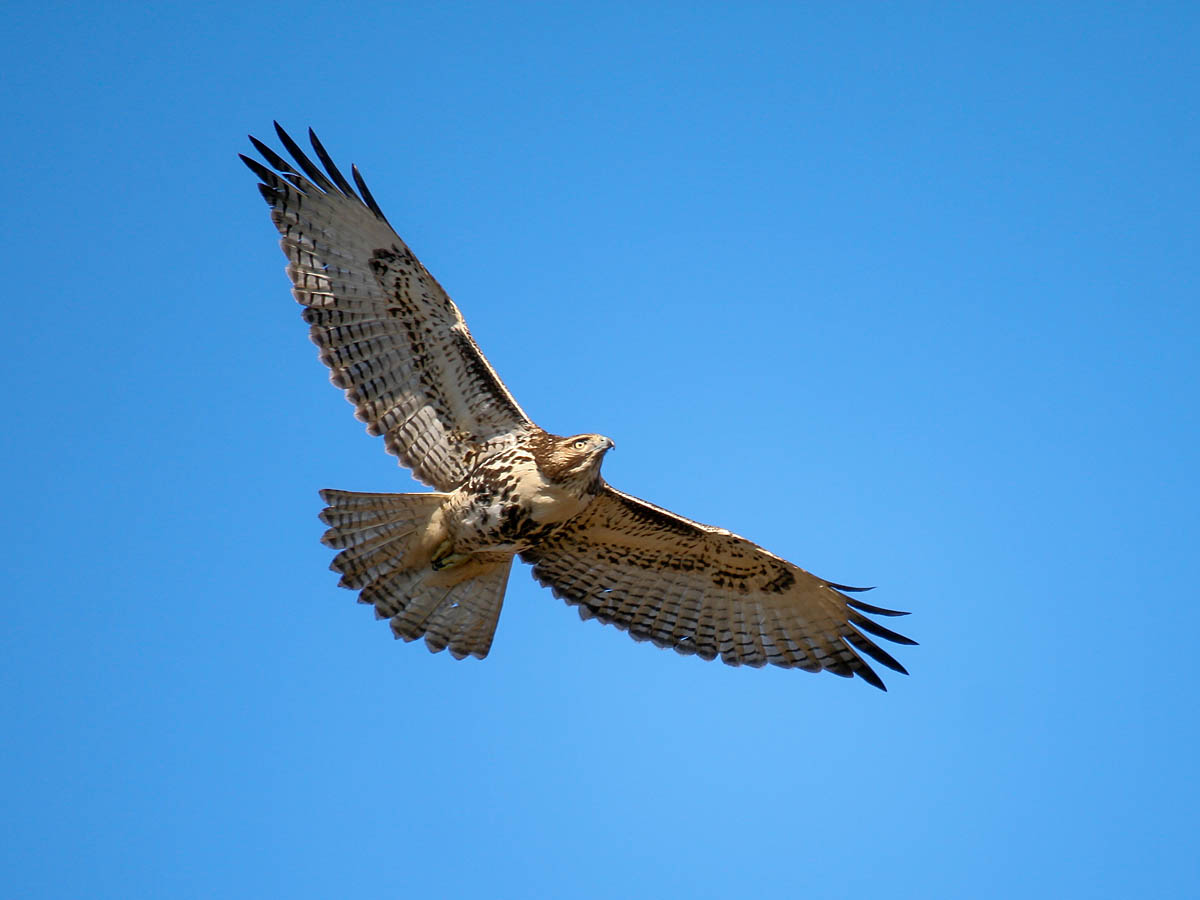
Red-tailed Hawk

#2 Juvenile Red-tailed Hawk as something else

As Steve Shunk notes, young Red-tailed Hawks do not have red tails. Robert Mortenson notes that Red-tails aren't just mistaken for other Buteos, but "every other hawk, falcon, and eagle." Richard Leinen admits that the "variability of Red-tailed can be confusing at times."

Most misidentified Pacific NW bird

Appearing on 5 out of the 6 lists, our experts agree that this is the most-misidentified bird in the Pacific Northwest.

Hermit Thrush

#1 Swainson's and Hermit Thrushes

Charlie Wright says that Swainson's Thrushes are reported erroneously every year, "rampant misIDs too early in the season." Visually they are confused with Hermit Thrushes, their songs and calls may be confused with Purple Finch or might be mimicked by European Starlings, Song or Fox Sparrows, Pine Siskins, or other songbirds. As Richard Leinen correctly notes, the supposed field marks shown in the ID guides "don't seem to be obvious in the field."

Honorable mentions

The following species received mention on two lists: female Common and Barrow's Goldeneye, Black-capped and Mountain Chickadees, Lesser and Greater Scaup, Tundra and Trumpeter Swans, Cackling and Canada Geese, immature Bald Eagles as Golden Eagles, American and Pacific Golden-Plovers, Greater and Lesser Yellowlegs, Rufous and Calliope Hummingbirds, Bewick's and Marsh and House and Pacific Wrens, Violet-green and Tree Swallows, Least and Western Sandpipers, female Common and Red-breasted Mergansers, juvenile Black-crowned Night-Heron and American Bittern, Brandt's and Pelagic and Double-crested Cormorants, Gadwall and female Mallard, female Eurasian and American Wigeon, juvenile and winter Red and Red-necked Phalaropes.

All photos by Greg Gillson as they appear in the photo checklist of Oregon birds.

Sunday, February 10, 2013

My Wintering Bird Magnet

As winter begins to wind down, I'm going to feature a special shrub I have in my front yard ... a bird magnet for wintering birds here in Missouri. This magical bush has been a great source for bird photography this winter. And what is this bird magnet? It is a holly bush.

When the house was built a few years ago, I struggled to identify plants to add around the foundation. Being a Master Gardener, I had a lot of resources available to me. Since our house faces northwest, and we have a lot of woods surrounding us, I needed something that tolerates shade. I decided on planting a couple of holly bushes, one male and one female bush (in order to get berries, it is necessary to have both sexes of plants). Now that these bushes are maturing, the berry production has been profuse. Consequently, the bird activity has been high and has given me lots of photo opps. Here are a few of the species I've been able to capture:

The first species that took to my hollies was the Northern Mockingbird (Mimus polyglottos). This bird has been a frequent visitor to the holly bush for several years now:


And starting this winter, I have had the joy of photographing several other species that are now challenging the Northern Mockingbird for the berries. My most prized visitors this winter were a group of 6 Cedar Waxwings (Bombycilla cedrorum). Always a beautiful bird, but oh so majestic in the snowy hollies!


The next visitor? A European Starling (Sturnus vulgaris). When these birds are captured in good lighting, the purple and green gloss really shines through the black coloration!


Still another frequent visitor to my hollies is the Northern Flicker, yellow-shafted variety (Colaptes auratus), often arriving in pairs:


I also had a few Eastern Bluebirds (Sialia sialis), which is our (Missouri's) state bird. They have been one of the most skittish of the birds visiting the holly bushes, so I only have a few images of these beauties.


And this next image of the bluebird, one of my favorites, was not on the holly bush, but was waiting in a nearby tree, till the holly bush was a bit less congested with bird activity!


A few Northern Cardinals occasionally come to the holly bushes, although they mostly come to the sunflower seed feeders on my covered front porch:


And one new visitor was the White-throated Sparrow (Zonotrichia albicollis):


Not to be outdone, a male House Sparrow (Passer domesticus) showed up:


And this next image was shot early in January. Apparently, our up-and-down temperatures this winter have created a confusion in our birds ... this female House Sparrow showed up with a twig ... isn't it a bit early to start nesting!


And this unidentified bird showed up one day. I certainly appreciate any identification help with this one. My guess would be a Wood Thrush (Hylocichia mustelina):


I think you will agree that the holly bush is a wonderful bird attractant in the winter. But the shrub can be a wonderful landscape plant, sans birds! Here are a couple of images of one of my holly bushes, in the dead of winter:


In conclusion, if you are doing some landscaping and need a good bird attractant, consider using one my bird magnets, the Holly! And if you want to make the best of everything, plant it in front of a window and bird all winter, from the comfort of your own home ... I did and it sure is nice!

Post authored by Jim Braswell of Show-Me Nature Photography