Sunday, August 5, 2012

Birding 24/7 fun


Northern Rough-winged Swallow

Good birders are always "on."  For us and them, there is no "off" switch. They have a deep awareness, going down into their subconscious, that continually scans, like airport radar, for any sight, sound, or indication of the presence of birds. For Don and I, birding is 24/7, and here are a few recent examples of what it's like for us. 

While at dinner with friends at an outdoor restaurant by the river, four forms zip by, faster than the Millennium Falcon and I blurt out, "Northern Rough-winged Swallows!" Our dinner partners, non-birders, were not interested. 

Winter Wren
On a garden tour in Maine a long, bubbling sound drifts over the zen-like peacefulness of the asian-inspired garden. My subconscious speeds through my memory-file of bird songs and slams on the brakes at "Winter Wren." Don and I delight in this small, secretive bird of forests, perhaps the smallest bird with the longest song, and how very, very, cool it is to know it's here. Others around us do not notice it.

Black Guillemot

Don scanning the harbor

In Bar Harbor, we choose a restaurant where we can look out over the bay with binoculars. We spy a Black Guillemot, one of our Maine favorites, while we're eating lobster. 

Ruby-throated Hummingbird

While on our deck this morning, sipping coffee, we record in our daily journal all the birds we see and hear, including the Ruby-throated Hummingbird who, only feet away, nectars on the Salvia "Lady in Red" I planted for it.

We check our ipads, as we do daily, for the New England birding listserves, just in case a rarity shows up. 

A hike in the hot sun yesterday afternoon, lugging our scopes to the edge of the big pond we front on, rewarded us with looks at our property bird species number 197 –  two Pectoral Sandpipers! We go home and pop a bottle of wine to celebrate.

Summer Tanager

When we were in Sanibel Florida this winter, we looked daily at weather reports, including wind direction from the Yucatan and the mid-Gulf buoy, as well as scanning the bird predictor websites, hoping to catch migration fallout, which we did! See our post.

Barred Owl

Recently I was roused in the middle of the night to a dreamy half-consciousness by the sound of a hooting Barred Owl. Snapping awake, the first thing I did was shake my sleeping husband who was more than happy to be woken to hear the owl. 

These are just some examples of having our birding radar on all the time. When I think back to the dinner at the river, I am aware of how much richer and fuller my life and Don's is, compared to others who have no sensitivity to birds. Our world is enhanced so greatly because it is filled with this special awareness of birds, 24/7. Hope yours is too.

Saturday, August 4, 2012

And it's Going...Going...Trogon!

For years now, my Pops and I would make trips down to southeastern Arizona, always enjoying the beautiful birds and scenery, but also leaving a bit unfulfilled. We weren't always there at the right time of year, and we didn't always try really hard, but the fact remained that despite a long residence in Arizona and not-infrequent trips down south, we never saw an Elegant Trogon. At first it was a palatable failure. We weren't too serious and Trogons are not common birds. But over time, we began to sense a great emptiness in our lives, a void in our existence that could only be filled by avian elegance, and so the need to view the Trogon grew and grew.


The frustrations and failures continued over the years, with the taunting of this psychedelic bird eliciting outbreaks of psychosis every summer. The Trogon changed from just an avian jewel to a full-blown nemesis, a very stylish nemesis, which is the most dangerous nemesis of all. Instances of missing the birds in Madera Canyon or the Chiricahua Mountains by a day or even hours turned the pursuit into something more than just a leisurely birding expedition. It became an existential imperative that we see the Trogon. It became...mortal combat!!!


The intensity and passion is always palpable when birders squeeze into a small sedan and head off into the mountains, and on July 19th the little red corolla must've been glowing as the Butlers Birds Team embarked on an epic quest down to the Santa Ritas once more. As per the usual, our main goal was to see a Trogon. But this time things were different. This time the phrase, "or die trying" was thrown around a lot. This time we had all the necessary ninja gear. This time we were ready. 

We didn't get up into Madera Canyon until the afternoon, having first made some great stops at Montosa Canyon and the Kent Springs Trail for Plain-capped Starthroat, Scarlet Tanager, and Sulphur-bellied Flycatcher. Seeing these other birds was awesome, and it was all part of a perfect and ridiculously circuitous plan. By going after other specialties and rare birds first, the Trogons would not be suspicious that we were coming for them. 

Loud and flashy, the Sulphur-bellied Flycatcher is a great decoy when one is going after a nemesis.

We ran into some other birders on the Kent Springs trail who were seeking the Scarlet Tanager (a rare bird for Arizona), and they informed us that they had heard some Trogons calling on the Madera Canyon Super Trail earlier that day. We made a mental note and then continued to search out this enigmatic Tanager. We eventually located the ruby-red bird and helped our earlier helpers to some great views as well, before heading over towards the Super Trail, an appropriately hyperbolic name for a nemesis showdown. 

Heading down Kent Springs and then further up the canyon was grueling. The heat was hot, as heat is known to be, and the humidity kept things humid, as humidity is wont to do. But no amount of adverse meteorology, not even meteors, could deter our meeting with the Trogons. Even when an adorable bricolage of bubbly birds--Bushtits and Bridled Titmouse and Bell's Vireos--came bumbling through, we stopped only for a minute. House Wrens and Canyon Wrens called to us as we hiked up the Super Trail wash, "Go back! It's too dangerous!" but soon they sat quietly on the sidelines, eager to see how it all would go down. 


The Wrens were not the only bystanders; other Madera residents, like this Yarrow's Spiny-tailed Lizard, peeked up to witness the reckoning. 


After hiking maybe a half-mile up the Super Trail, we began to hear the famous croaking calls of the Elegant Trogon. In fact, it seemed like there were two birds talking to each other. We scoured the trees for their bulky, long-tailed silhouettes. Beads of sweat began to form and run for the ground while the air held still, broken only occasionally by the koa koa koa that faintly echoed around us. After an eternal-seeming fifteen minutes, the calls came discernibly closer. I turned to face Pops and just as I did, a whooosing sound shot past my head. Reacting just on instinct and training, I tucked into a somersault, rolled forward in an action-hero kinda way (not really), and drew my Sony Sharpshooter. I looked up to see Pops' gaze transfixed ahead of me. There perched our elegant nemesis, resplendent and radiating with a show-stopping beauty nearly unparalleled in North America. Rather appropriately, the light was behind him, shining down in regal fashion.


The Elegant Trogon did not stay for very long, but even this brief sighting was enough to appease the aggravation of those fruitless years. The bird was incredible in the literal sense of the word; I couldn't believe I was looking at it then and there. The Trogon didn't exactly seem to fit in that sycamore and scrub-oak canyon. It didn't seem like his natural environment. Nonetheless, every year these tropical visitors bring the hard-earned reward of jaw-dropping beauty to the southeast Arizona birders, and this year we were finally among the lucky number.  


Seeing an Elegant Trogon was top priority this summer, and it came as one of our last sightings on the last real birding adventure of the summer. By golly, these birds know showmanship! And so, a tale of nemeses and hardship ends in happiness. So far, we've all lived happily ever after.


Posted by Laurence Butler
Clip Art courtesy of Maria Butler

Friday, August 3, 2012

Sparrows of Nelson Lake

One might imagine that the vast prairies of the middle western United States have always been there, but in the geological time scale they are relatively new, the product of global warming.  The last glacial period reached its peak only about 18,000 years ago. Ice covered most of Canada and extended down into what are now the north Atlantic states and south to around the Ohio River in the Midwest.

Studies of the age and species of pollen collected at nearby Nelson Lake provide an interesting picture of the history of the prairie. As the ice receded over the next 2,000 years the area around my second home in Illinois resembled present-day Arctic tundra, covered by low-lying sedges and scattered evergreen trees. Humans crossed over to North America from Asia via the land bridge before the oceans rose to separate the continents.

Spruce forests then proliferated over the next 5000 years. The soil remained moist, favoring hardwoods such as ash and elm that began replacing the evergreens.  About 11,000 years ago, as rainfall diminished, oak and hickory appeared, and the pollen record indicates that grasslands developed in forest openings. Beginning around 6,500 years ago, with the onset of a 3,000 year dry period, lightning-caused fires greatly enlarged the grasslands as they flourished and evolved into the landscape that greeted the first European settlers. Following this, as prairie was tilled and forests were cleared, exotic plant pollens appeared. Native grasses and plants declined.

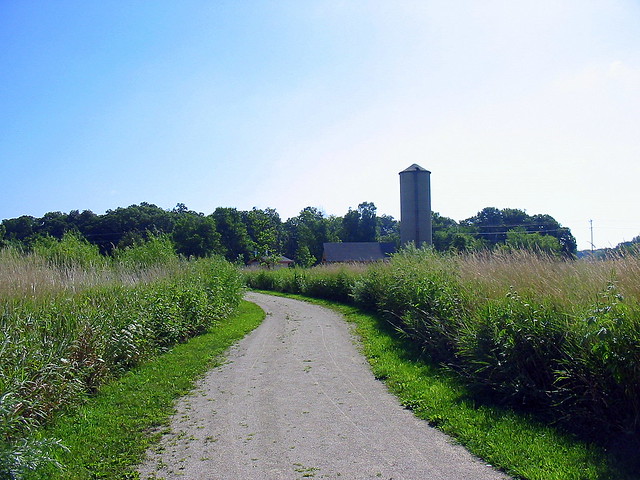
A view of the old silo and restored tall grass prairie at the east entry of the Nelson Lake Marsh/Dick Young Forest Preserve, Kane County, Illinois. Ahead, a woodland borders the east shore of the lake.

East Entrance Nelson Lake 20090818

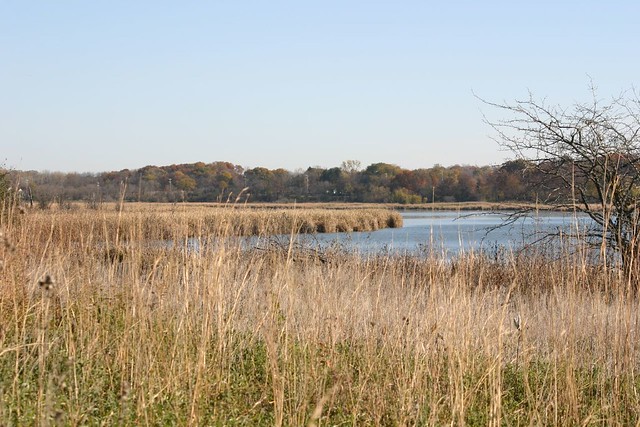
There are wetlands along the southern and western edges of the lake, as well as in several potholes.

NelsonLakeOverview 065

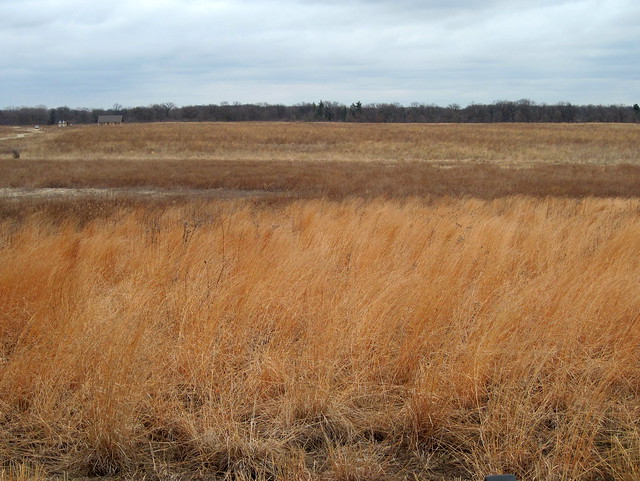
Prairies extend to the north and west of the lake. These 800 acres of former crop and grazing lands are actively managed by mowing and controlled burns to restore them as nearly possible to their original condition. In fall the grass turns a golden brown and is a rich source of seeds for overwintering wildlife.

Looking east from sign 20100315

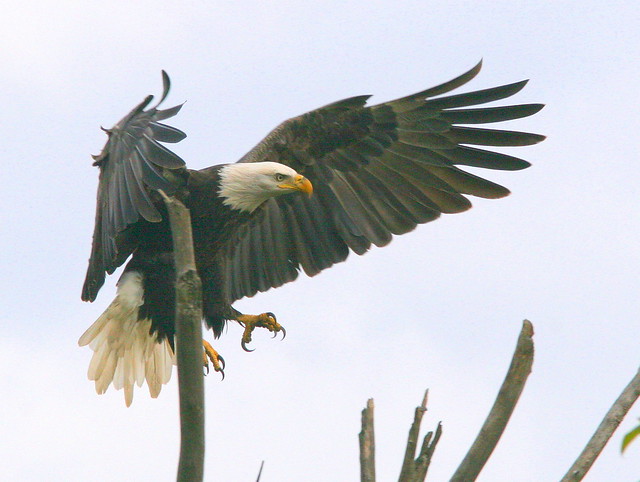
Over the course of the seasons, the diverse habitat attracts a stunning variety of bird species, from the large...

EagleLanding20091001

...to the small.

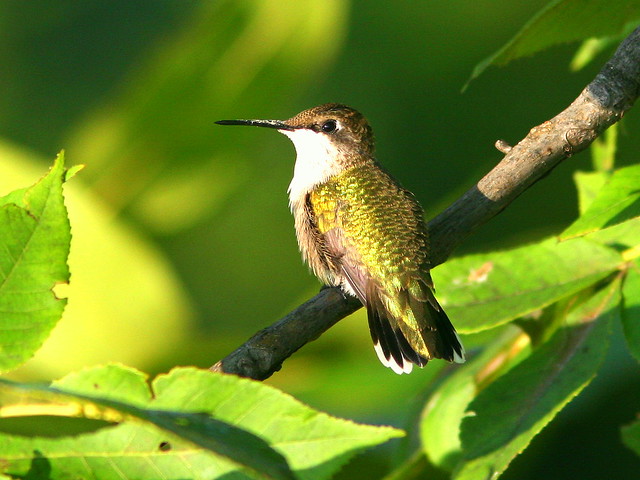
Ruby-throated Hummingbird 20090813

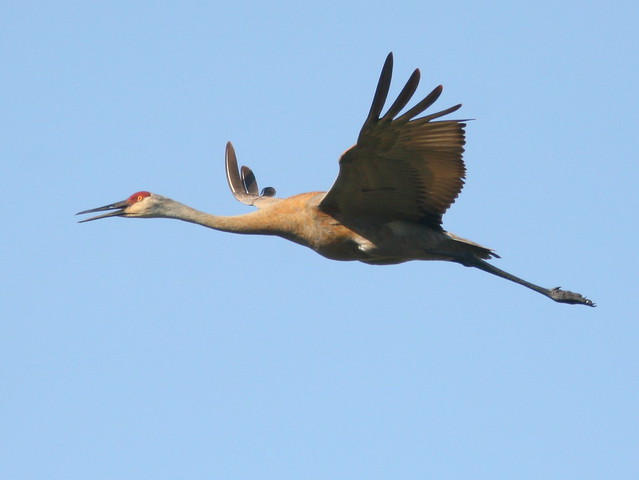
 Sandhill Cranes breed in the wetlands.

Sandhill Crane SOOC cropped 20100415

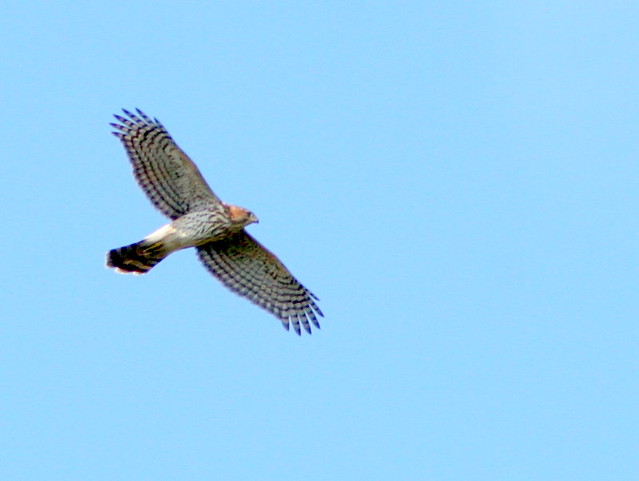
A Cooper's Hawk soars overhead. The prairie suddenly falls silent.

Coopers Hawk 20090917

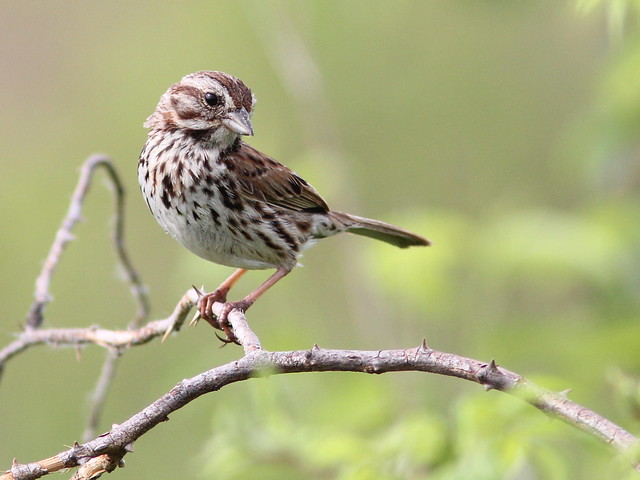
Sparrows are among my favorite photographic subjects. Catching them out in the open and in good light requires patience (and I must admit that at my age I don't mind the opportunity to rest a bit while I wait). Several species of sparrows breed in the grasslands and marginal savannas. Song Sparrows are most abundant.

Song Sparrow 2-20120529

Savannah Sparrows often forage on the trails.

Savannah Sparrow 2-20110707

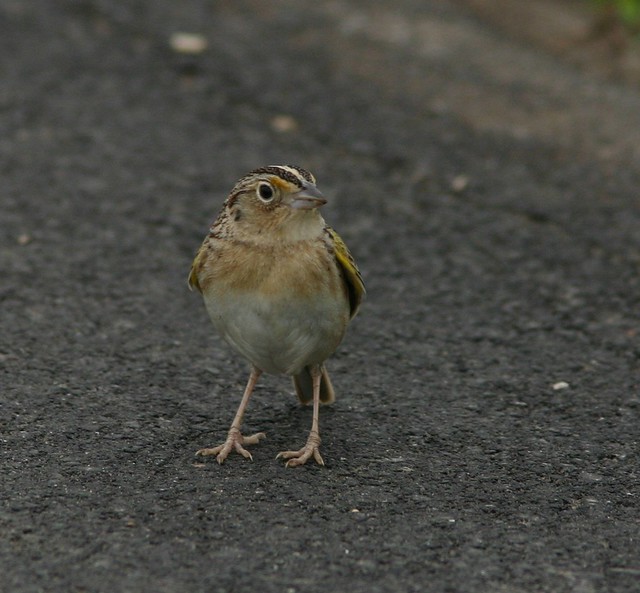
Tiny Grasshopper Sparrows are less often seen out in the open. Their numbers seem to depend upon the availability of short grass in areas that had been recently mowed or burned.

Grasshopper Sparow 20080603

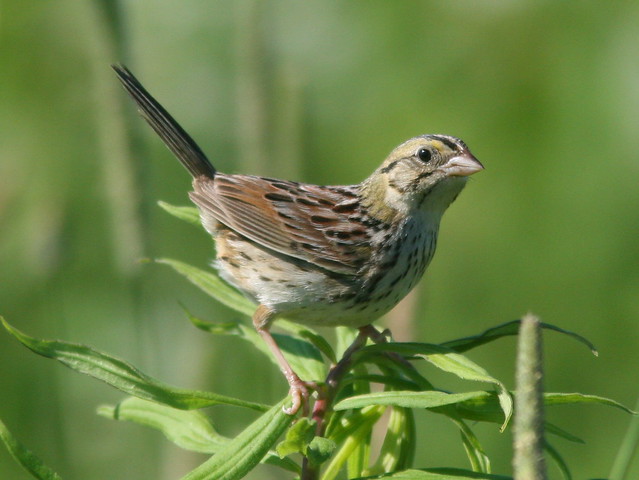
A few Henslow's Sparrows breed in the prairie in small clusters.

Henslow's Sparrow SOOC crop 20100630

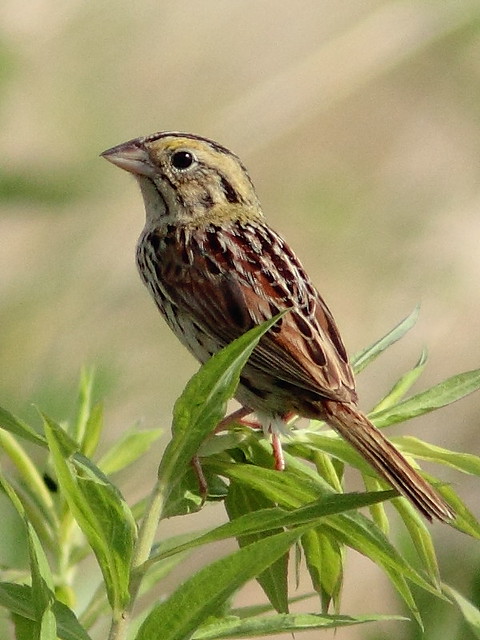
The habitat requirements of this threatened species are very demanding, as they will not build a nest in a recently cleared area. Henslow's Sparrows select nesting areas that have a couple of  years of dead grass litter accumulated on the ground. They abandon the site after two or three years, when taller weeds and saplings start invading. They also require an expanse of tall grass prairie surrounding their breeding areas, and will not nest in fragmented habitat.

Henslows Sparrow crop 20120620

Henslow's Sparrows are more often heard than seen, as they sneak through the grass like mice. They look as if they are putting great effort into their song, which comes out sounding like little more than a squeak.

Henslow's Sparrow (Ammodramus_ henslowii) 5-20120529

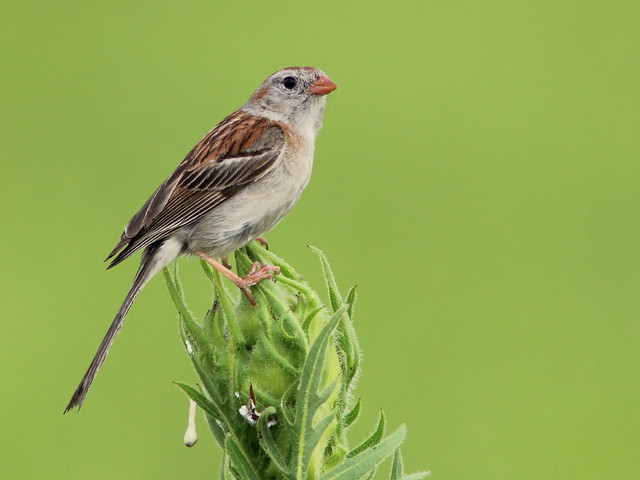
Field Sparrows prefer the woody edges of the prairies.

Field Sparrow 20110707

Swamp Sparrows build their nests in the marshes.

Swamp Sparrow 3-20100420

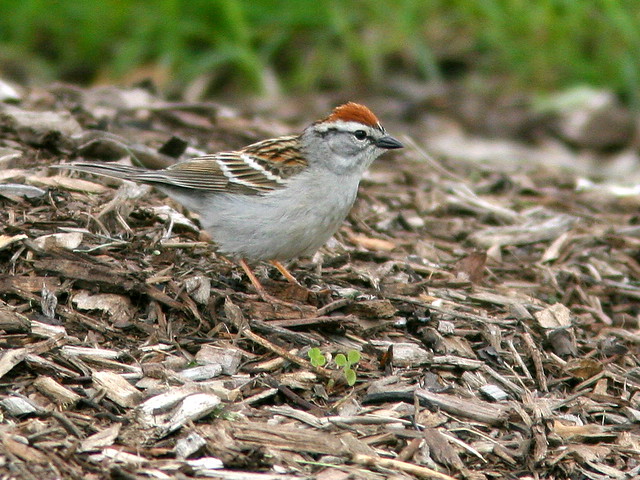
Chipping Sparrows are most commonly found in the woodlands.

Chipping Sparrow 20100515

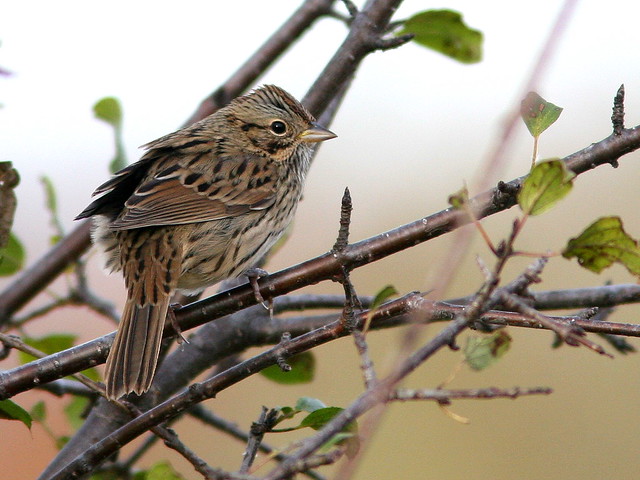
Among the non-breeding sparrows, I have seen a few Lincoln's Sparrows.

Lincolns Sparrow 20101029

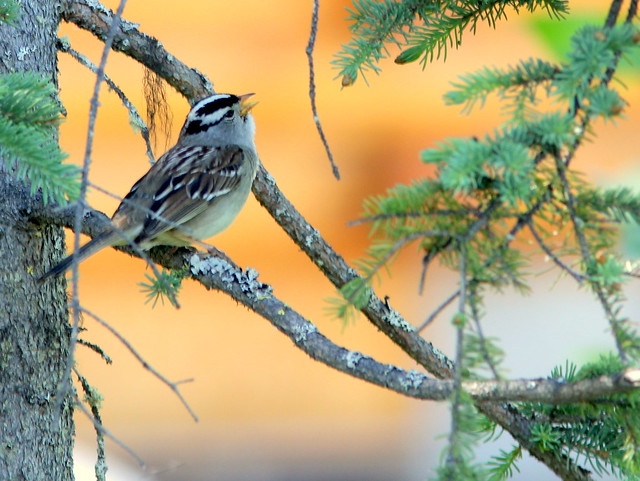
White-crowned Sparrows invade as winter approaches, and stay until spring. (This photo is my favorite of the species. I took it in Alaska. All the other images are from the Nelson Lake area.)

White-crowned Sparrow 20110617

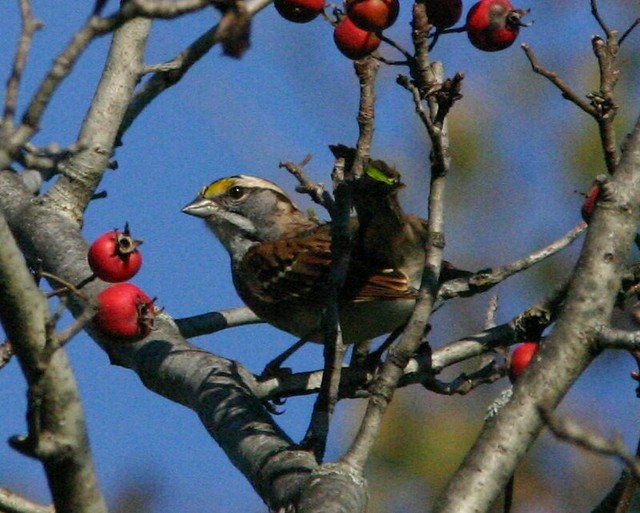
White-throated Sparrows favor  the shrubby margins of the woodlands.

White-throated Sparrow 20081004

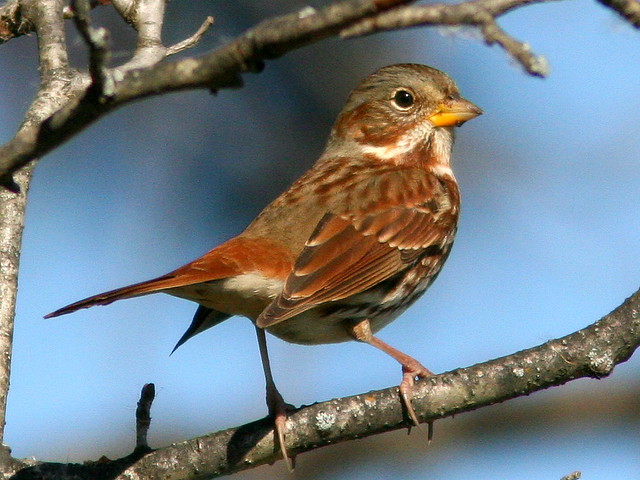
Fox Sparrows can be elusive, rummaging through the ground litter or hiding in the trees.

Fox Sparrow 2-20101017

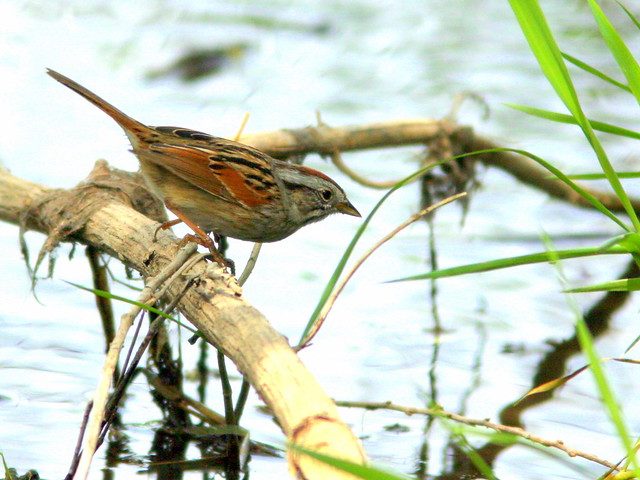
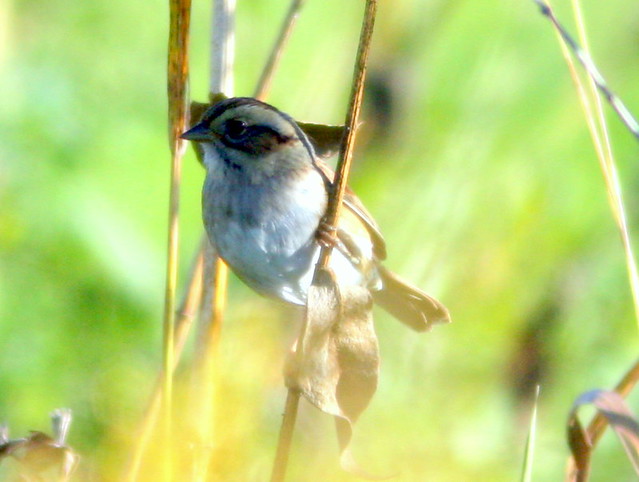
This [I thought was] is the only Clay-colored Sparrow I have ever seen at Nelson Lake. [See Steve's comment below. The corrected identification is Swamp Sparrow-- sorry about that, but in the field its light breast and dark "mask" led me astray, not to mention the fact that it was in a thicket out on the prairie. Ken]

Clay-colored Sparrow 2-20101007

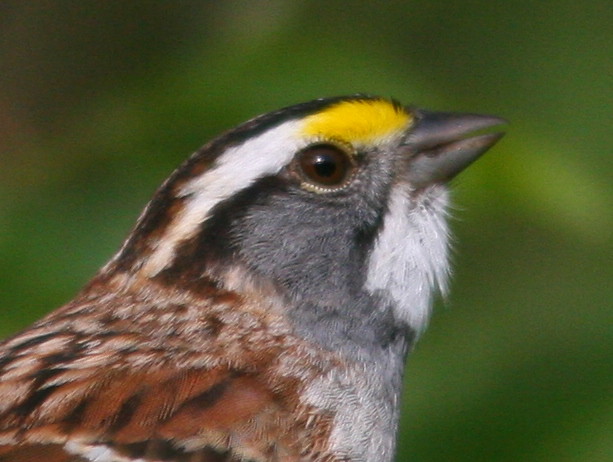
Now take a good look at this-- will you ever again call sparrows just LBJs*?
White-throated Sparrow SOOC heavy crop 20100419

* "Little Brown Jobs"-- NOT


Search archives of ROSYFINCH.COM

Thursday, August 2, 2012

Just for Fun


Birding is such a fun pastime. While out on a birdwatching excursion there is always something beautiful, interesting or fascinating to see. Sometimes bird behavior can be quite comical and/or baffling. This post features various birds exhibiting behaviors that will hopefully bring a smile to your face.


While vacationing in Florida, I found this handsome Osprey perched atop a dead tree. I was thrilled when it began ruffling its feathers, which I thought would make for a more interesting photo. 


Not quite as interesting as I had hoped.


While photographing this serene scene of a Snowy Egret looking out over Sarasota Bay, a feisty Wood Stork entered the frame and goosed the unsuspecting egret.


This male Eastern Bluebird gets my vote for the Father of the Year Award. The attentive dad gathered up six or seven plump waxworms to feed to his five hungry nestlings.


A bit camera shy ~ Green Heron


Another bird who would rather not be photographed ~ Snowy Egret


Peek-a-boo! ~ Prothonotary Warbler


Those crunchy crab legs don't exactly slide down the throat ~ Juvenile Yellow-crowned Night Heron


I snapped this photograph of a Ruby-throated Hummingbird just as it was about to fly off the feeder. At the moment I captured the departure, it had twisted its head right-side up, though not the rest of its body.


Oh dear ... I guess when you gotta go, you gotta go.


"You talkin' to me?" ~ Green Heron


A Snowy Egret playing ostrich.


I guess this Ospreys last meal was not quite sushi grade fish.


I came upon this American Robin with its wings splayed low against the forest floor. I've also seen Eastern Phoebes exhibit this interesting behavior. One explanation could be what is called "anting". The bird spreads its wings and lies in an area where ants are present. Ants are then rubbed onto the feathers. The ants' body fluids are thought to repel or kill parasites.


Perhaps Pepto-Bismol is in order ~ Green Heron


A very berry mush face ~ House Finch


Posted by Julie Gidwitz