Saturday, November 3, 2012

Setting priorities, and remembering birds in a vacant lot

One's priorities change over time. The inevitable and the unexpected, and the balance between wants and needs all come into play. Getting drafted in 1966 and suddenly moving from New Jersey to west Texas with our three children was jarring, yet eventful in a very positive way. We selected our El Paso rental home mostly because of its convenience to schools, work and shopping. The expansive blue sky and the mountainous backdrop were pleasant but not necessary. Likewise, our subsequent homes in New Orleans and Dallas were chosen with similar needs in mind.

Only after 27 years, when retirement approached and we were "empty nesters" did we think about what we really wanted in a home. My love for the southwest was an overwhelming consideration. For Mary Lou, proximity to family was an equally important factor. On one of my business trips to New Mexico I learned of a new subdivision under construction. In a moment of free time I visited the site and called the number on the real estate agent's sign. After a short visit I selected a home site and called Mary Lou to seek her agreement on entering into a contract. Despite her reluctance about the fact that I had not yet even set a retirement date, I knew she shared my feelings about the region. Besides, two of our children lived within a few hours drive, in Texas and Arizona.
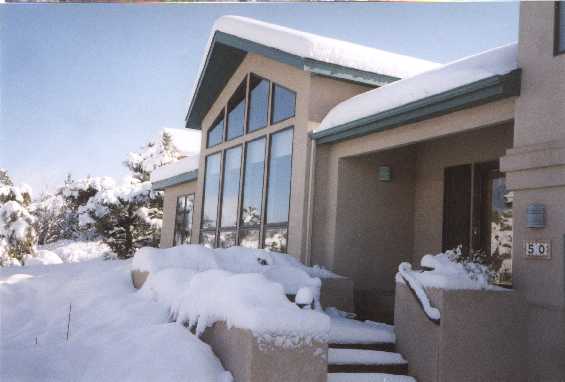


In New Mexico, living at 7,000 feet elevation, we had our mountains and four seasons.The tremendously varied habitats provided great birding. Of course, the nearest shopping centers and health care providers were located twenty or more miles away, accessible only through a single mountain pass that could be choked by a blizzard or a traffic accident. After eleven years we reconsidered our priorities, and took the dramatic step of moving to south Florida, to be near our younger daughter's family. In lieu of mountains we wanted to look out over water. Eyes that are fixed on a distant vanishing point are eyes at rest.
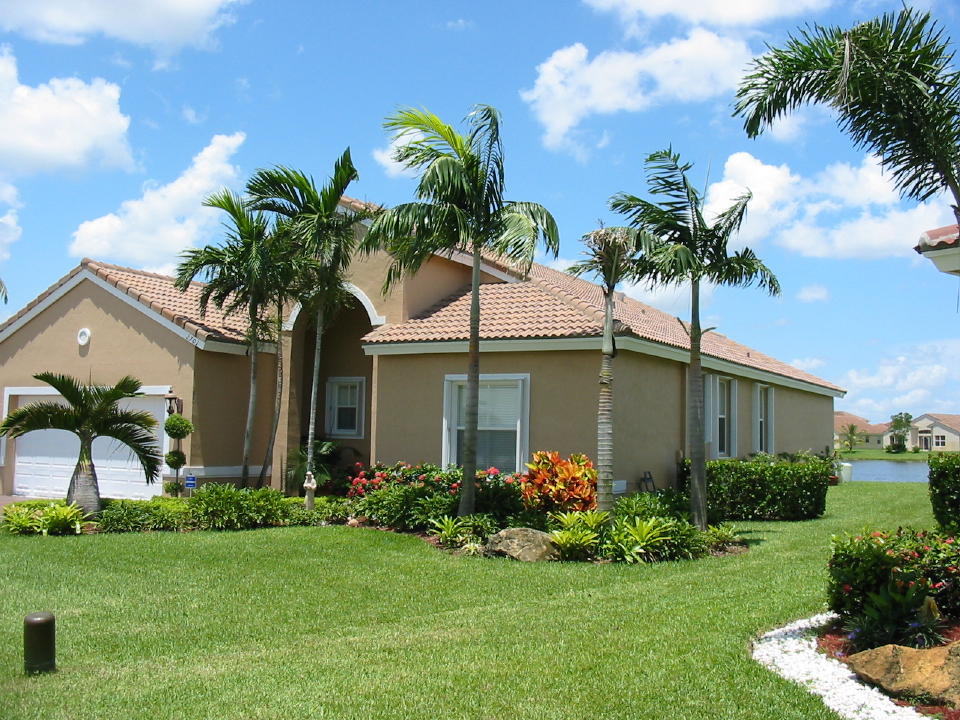


Our daughter actually selected our Florida home.  We ratified her choice and moved here in 2004. We had not yet sold our New Mexico home when, three months later, her husband got a big promotion to Chicago and they moved away with our two baby granddaughters! It took us two years to make the weighty decision to purchase a second home in Illinois. We hoped to balance our newly discovered love of mild Florida winters with our need for family. Now the view was not an issue. We needed only a "crash pad," a place to stay when it was hot and humid back in Florida. We selected a town-home only two miles away from our daughter's house.
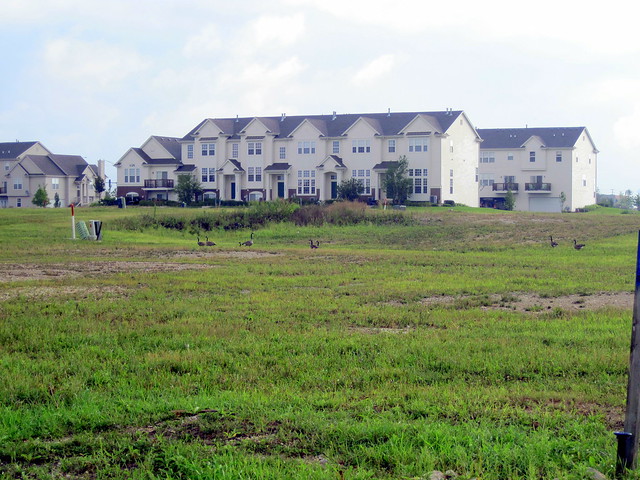
 
Our Front Yard 20100820

It was a new unit, in one of the first of 36 buildings that were scheduled to be part of a complex with homes for over 200 families. We knew that subsequent construction would fill the surrounding open space and blot our our view of the horizon. The housing crisis hit as the seventh building was finished, and the developer was unable to complete the project. Construction was put off indefinitely, and the land, the equivalent of four or five city blocks around our condo, remained undisturbed for six years. As it returned to an imperfect grassland, it became an unexpected birding treasure. The above photo was taken in 2010, after the land had been healing for four years.


Thunder was usually the only ominous sound under the prairie skies.
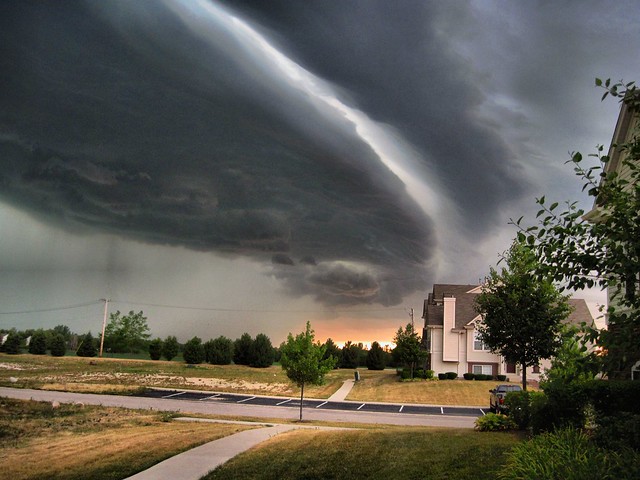
Cloud North End HDR 20120629

Sadly, but not unexpectedly, this week we also heard the roar of bulldozers as the entire area was being cleared and graded. Time to stop and remember how nice it was while it lasted.
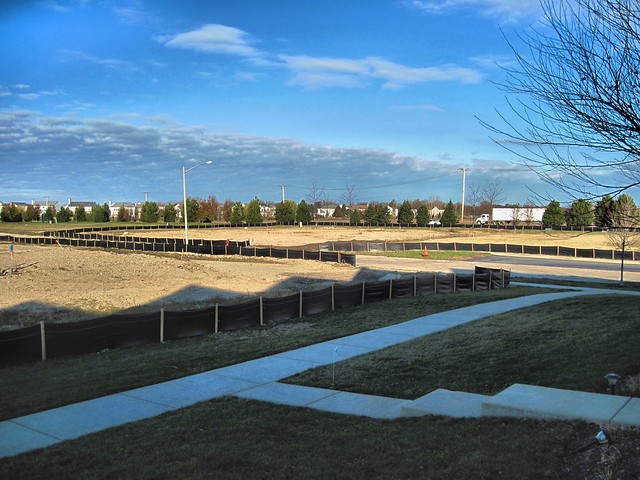
Kilbery construction HDR 20121101
Our front door provided an ideal vantage point for viewing birds that rested on the color-coded utility markers.

American Kestrels nested in one of the large trees along the main road.
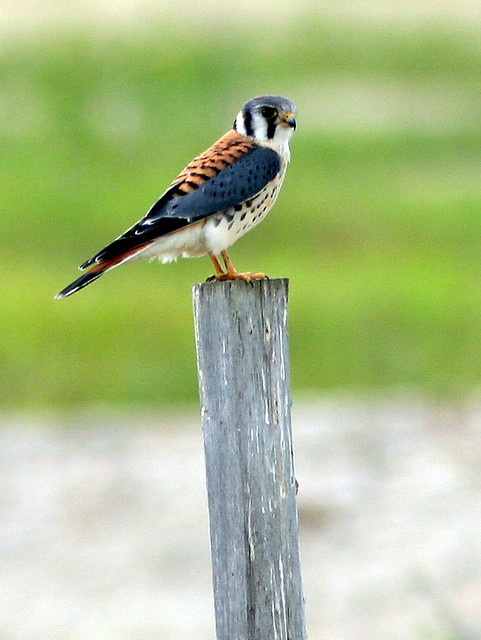
American Kestrel 20090821

Horned Larks built their nests early in the spring near our front doorstep.
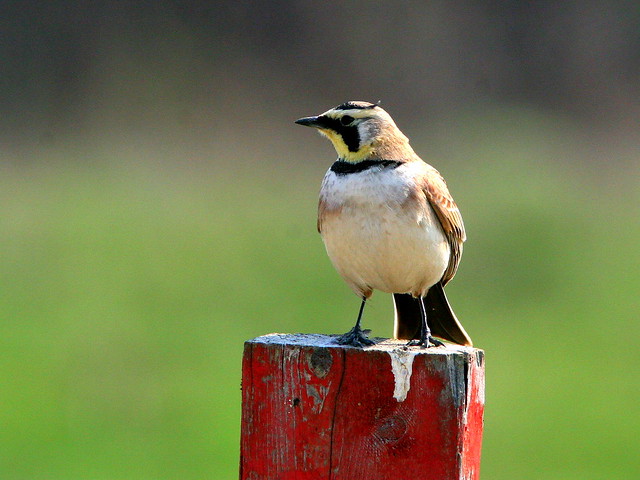
Horned Lark 3-20100410

Savannah Sparrows sang and defended their territories.
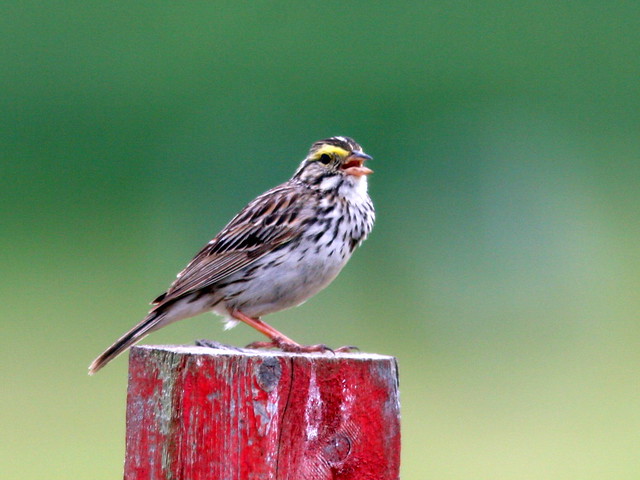
Savannah Sparrow 20100605

American Pipits visited during migration into winter.
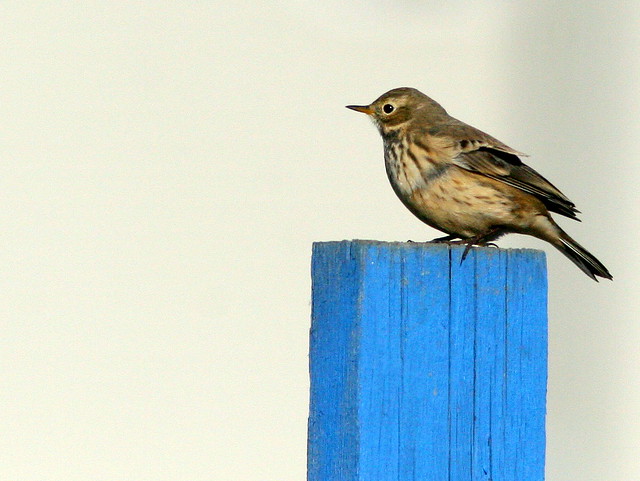
American Pipit 3-20101102


At least one pair of  Eastern Meadowlarks raised a family out in the largest open tract.
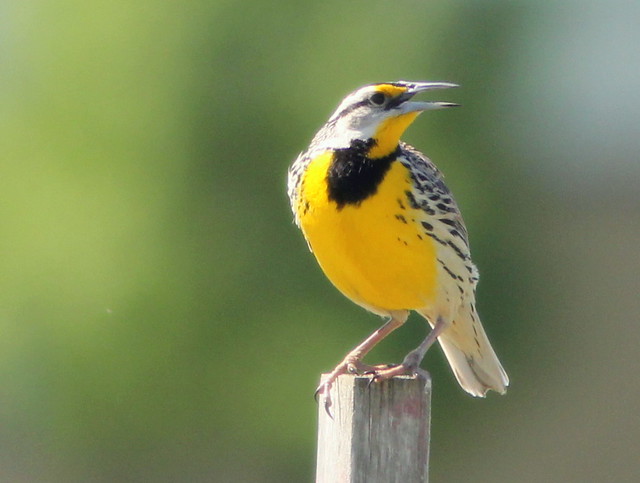
Eastern Meadowlark 20110522

Red-winged Blackbirds shared a pothole with muskrats.

Red-winged Blackbird 20120601

A pile of construction rubble provided another high perch in the treeless empty lot. We could drive around the corner and park, using the car as a blind, and just wait for the next bird to occupy it. Lazy birding at its best!

Spotted Sandpipers sang all spring. The area had room for several breeding pairs.
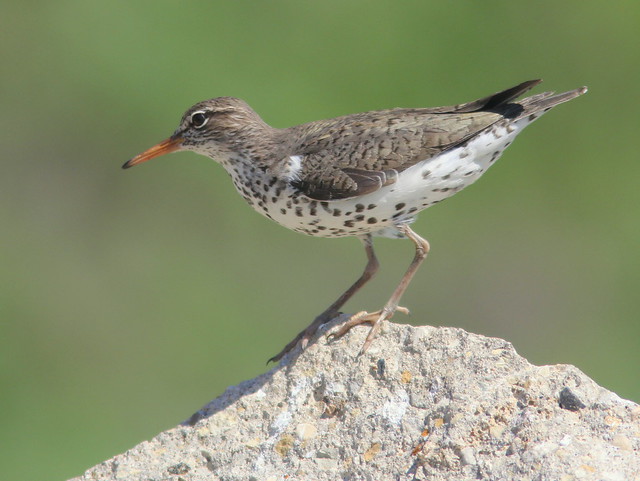
Spotted Sandpiper (Actitis macularius) 20110522

Song Sparrows visited and probably nested along the shrubby margins.

Song Sparrow DPP 20110815

For the past two years, Vesper Sparrows serenaded from the roof of our condo and surely found nesting areas in the weeds near the old mound of topsoil left when the area was first cleared.

Vesper Sparrow 20120506

In spring, melting snow and rain created roadside "fluddles" that attracted other birds. The only photographic challenge was to park with the sun at our back.

Solitary Sandpipers passed through during spring migration.

Solitary Sandpipers 20110821

Sandhill Cranes brought their colts to feed in the field right near our doorstep.

Sandhill Crane Yardbirds 20110803

Both Canada and the smaller Cackling Geese made use of the "floodles."
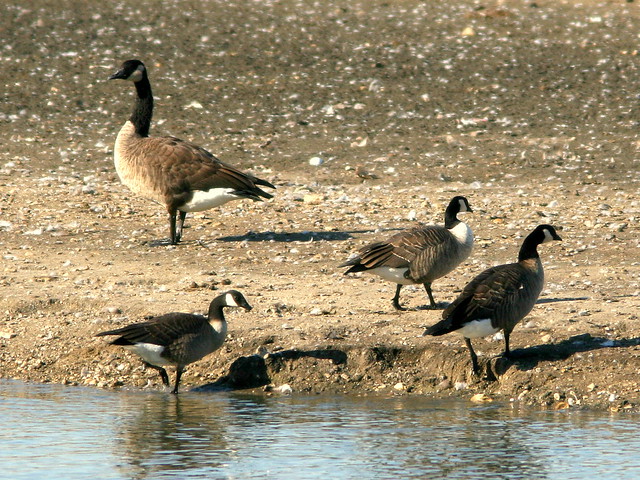
Cackling Goose- Branta hutchinsii 20101009

On one occasion, a "blue" Snow Goose paid a visit (photographed from inside an upstairs window).

Snow Goose in front yard 20110508

A Great Blue Heron seemed to be hunting insects and possibly voles out in the fields.
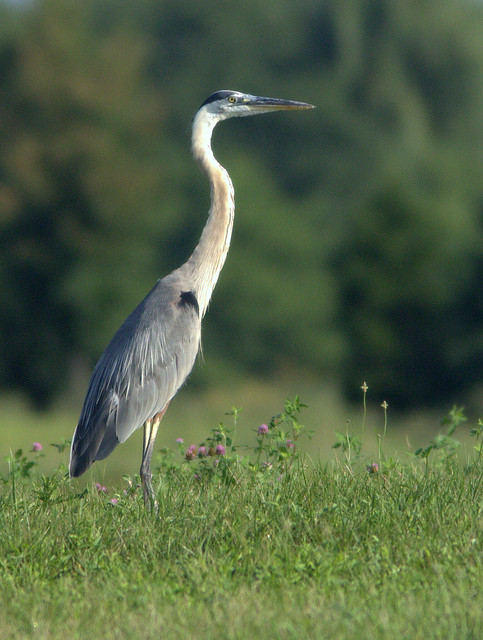
Great Blue Heron 20110803

Red-tailed Hawks roosted on streetlights over empty roadways.
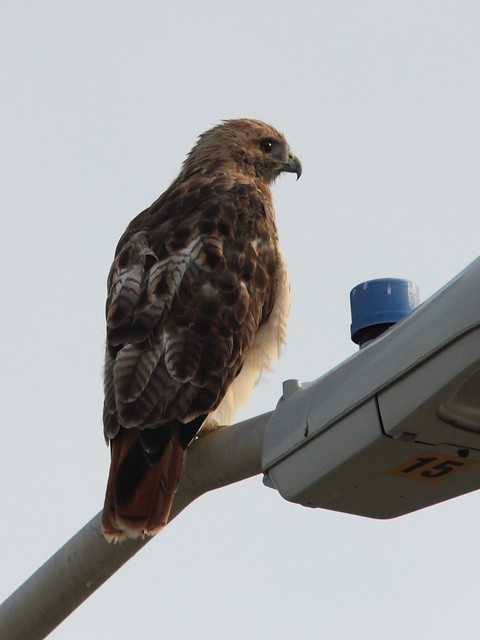
Red-tailed Hawk 20120819

Many Killdeer courted and raised their chicks every spring.

Killdeer courtship 20120601

Along the far edge of the property, American Goldfinches, flowers and butterflies delighted us with their color...
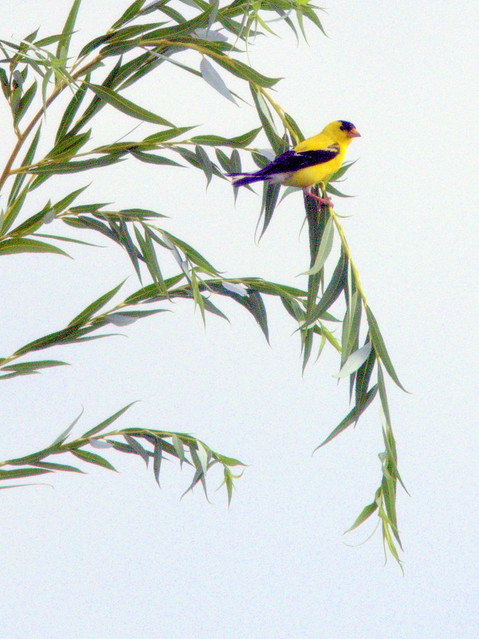
Goldfinch on wilow 20110803

...Chicory...

Chicory? 20110803

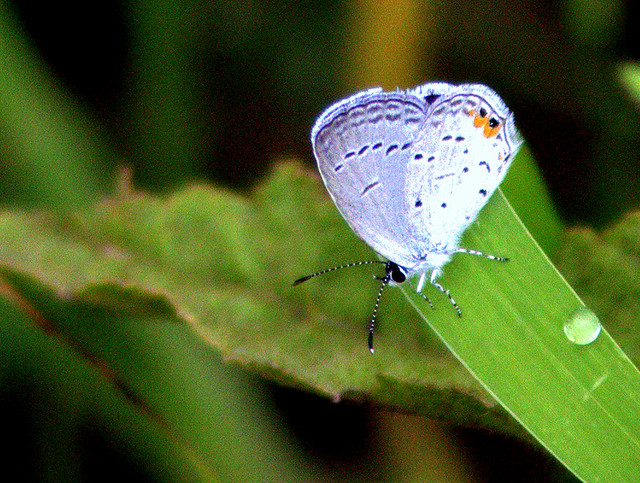
...Summer Azure.

Summer Azure Butterfly 20110803

I can mourn the loss, but cannot reverse progress, and will revel in  remembrances of a plot of land no longer vacant.  


Index of earlier ROSYFINCH RAMBLINGS posts

Friday, November 2, 2012

Views From the Water's Edge


Below are a series of photographs taken from the water's edge of beautiful Lake Michigan and scenic North Pond in Lincoln Park, Chicago.


A colorful Wood Duck wades in cool pond waters


A secretive Sora makes its way along a submerged branch


On the hunt ~ Green Heron


Cinnamon Surprise! Cinnamon Teals are not often seen in Chicago, but I was fortunate to view this red-eyed duck at North Pond last year


A stunning American Kestrel scans the beach for prey


A pretty Dulin gets doused by Lake Michigan Waters


Floating lazily in North Pond ~ Male Hooded Merganser


Standing in the shallows of Lake Michigan ~ Peregrine Falcon


Black-crowned Night Herons are a common sight at North Pond


One of several busy Horned Larks seen foraging at the beach


A lone Semipalmated Plover scans the shoreline for tasty treats


A striking Blue-winged Teal dabbles in the calm, cool pond


A brief glimpse of a beautiful Virginia Rail


A handsome Killdeer enjoys a sunny day at Montrose Beach


Afloat in the pond ~ Pied-billed Grebe


Posted by Julie A. Gidwitz

Thursday, November 1, 2012

Landfill Birding

As a homebuilder I regularly have to take construction debris to the county landfill. I hate throwing away money, but we recycle as much as possible. I take advantage of the opportunity when at the landfill to scope all the gulls looking for any unexpected birds.

On a recent trip to Hidden Hollow Landfill, while standing on the side of the road scoping the birds, a couple of guys pulled up next to me and the driver exclaimed, "Dude! Are you seriously birdwatching at the dump?!"

I smiled broadly and said with resolution "Yes I am." I briefly explained that there are often rare gulls spotted at the landfill and I was hoping to find one.

He replied, "And I just thought they were all 'dump chickens'."

Just for fun, I wanted to share the Mortensen Halloween costumes for this year.
My wife Jessica makes most of the costumes herself and we always have a family theme. Can you figure out what our theme was this year?

Ring-necked Pheasant Rooster


One of the really cool things about digiscoping is that I am willing to try and take photos that I would never have done in the past with my 150mm lens on my dSLR camera. The images are not as high quality as I get from my regular camera, but for long distance shots that I wouldn't try otherwise, I'm delighted with them. These rooster pheasant photos were taken with my iPhone 4S through a Swarovski Optik ATX 85mm spotting scope at 60 power. Yes, I said 60 power. Most scopes of lesser quality will have a dark and dingy image at 60 power, but one comes to expect crystal clear images with Swarovski. I feel like the camera's autofocus and my hand-holding is the only thing really holding me back from getting better images. Even at 60 power, the scope still has great light transmission and clarity to capture the array of colors seen on this pheasant.

I know it is not a native bird, but it is a well established in Idaho and just so dang beautiful. Just look at the colors and the patterns. Amazing! Make sure to click on the image to view them in a larger format.


Wednesday, October 31, 2012

Caring for our most important birding optics

As birders, we love our optics. We often talk about and compare and contrast the latest technologies in high-performance lens coatings. We want the best binocular, scope and camera lenses we can afford. Once we own expensive optics, we take great pains to care for them. Do we give the same level of consideration for the most important optics in our possession? I'm talking about one of nature's greatest miracles - our eyes - as well as those wonderful apparatuses assisting about half of us - corrective lenses.

As an avid birder, one of my worst fears is losing my eyesight. I've lately noticed floaters in my vision and it kind of scared me. I recently went in for my annual eye exam and the doctor assured me that small floaters are normal for middle-aged men. Oh, great. I'm one of those now. Ouch!

Over the last decade, no matter which optometrist I visit, they all take great interest in my birding pastime, especially related to how my corrective lenses interact with my birding optics. I'm an easy sell on all the optional lens coatings for eyeglasses as they quickly convince me that it will help my birding. Out of curiosity, I've recently been reading up on those optional lens coatings to see if there really are necessary or if I'm allowing myself to be scammed by well-intentioned eyecare professionals.

Did you know?

Ancient Egyptian hieroglyphs hint that glass lenses may have been used for magnification dating back to the 5th century BC. The first eyeglasses were made in Italy about 1286.
- Wikipedia
When it comes to eyeglasses, a variety of micro-thin multilayer coatings are available to further enhance high-tech lightweight plastic lenses. After reading up on them, I can easily recommend to fellow bespectacled birders scratch-resistant coatings (if your lenses don't already come with that feature), anti-fog coating (if you can get it), and ultraviolet light protection. Some of the scratch-resistant coatings even claim dust and water repelling properties, but I'm not sure that I have seen that really work. Water does bead up on lenses with it, so maybe that is what it is. Anti-reflective coating seems to be more for cosmetic reasons for people looking at the eyeglass wearer, so that they don't see distracting reflections in your glasses. Yet there are some things I've read that lead me to believe that anti-reflective coatings provide greater clarity, light transmission and they certainly help with night vision by reducing light glare. One disadvantage of anti-reflective coatings is that they may smudge more easily and be harder to clean. I always purchase the anti-reflective coating myself and with good lens cleaner solution and a microfiber cloth, they come clean just fine.

On this most recent visit to the eye doctor, I also ordered myself a pair of prescription polarized sunglasses. I selected tint that still allows natural color transmission and I have discovered that I can wear them and use my bins and scope without diminishing my enjoyment of beautiful color patterns or hurting my ability to hone in on field marks. I'm also hopeful that the polarized lenses will cut down on the glare and reflections when I'm scoping out waterfowl on local ponds and lakes.

Many birders may wear contact lenses. As it relates to birding, comfort is probably the most important factor to consider. I have an astigmatism in my left eye and regular contacts irritate my eye so much that I have basically given up on wearing contacts altogether. I have found that disposable silicon lenses that are weighted (stabilized) allow for longer wear and comfort which is important for those Big Days of birding. There's nothing worse the eye fatigue complicated with irritated dry and itching eyes. I'm now trying out some disposable daily contacts which seem pretty comfortable and they come with the added convenience of never having to store or disinfect them.

We need to keep in mind our eye health and protect those precious tools from ultraviolet light and bright sunlight. Light reflecting off of snow can be severely damaging and the same goes for high-altitude birding where there is less atmosphere to filter out the UV rays. You may consider a proper diet and nutrition for your eyes. Rich green leafy vegetables and eggs provide lutein. Appropriate levels of Vitamin C, E and Zinc are also important in preventing eye disease like macular degeneration. Routine eye exams and retina photos will help in the early detection of other eye problems. When it comes to a birders optics, the most important lenses are our own eyes.

Tuesday, October 30, 2012

Prothonotary Warbler Conservation

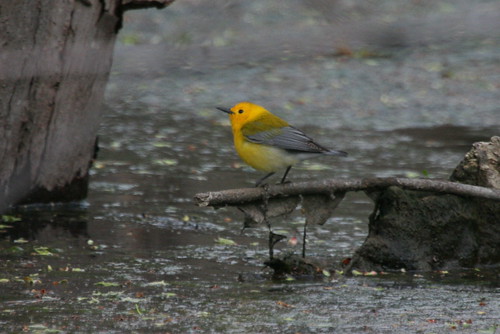
Prothonotary Warbler
Prothonotary Warblers (Protonotaria citrea) are one of the few songbirds to nest in cavities. They inhabit much of the southeast and Great Lake states and nest in swampy forests. Their mangrove wintering sites along the coast of Central and South America are rapidly decreasing.
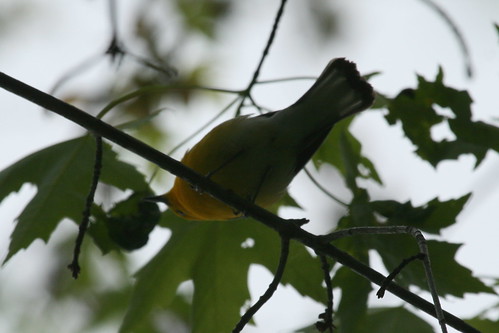
Prothonotary Warbler
In northern Illinois, Prothonotary Warblers are uncommon but found yearly along riparian areas. I find some nearly every year, although oddly not this year perhaps because of the lack of rain and not searching the right spots at the right time.

Three Ways to Improve Prothonotary Warbler Conservation

  • Increase acreage of bottomland and upland forest habitats
  • Slow or halt deforestation and degradation of wintering mangrove habitat (restore habitat where possible)
  • Develop baseline inventory of Prothonotary Warbler breeding and wintering populations
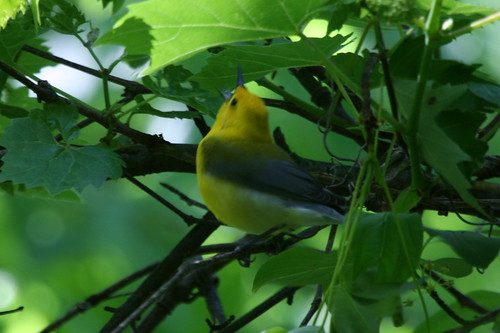
Prothonotary Warbler {Protonotaria citrea}

Conservation Action

Partners in Flight along with other conservation organizations such as Mississippi Valley Joint Venture, U.S. Fish and Wildlife Service Partners for Wildlife Program, The National Resources Conservation Service Wetland Reserve Program, Ducks Unlimited, and the Nature Conservancy have taken up efforts to increase acreage of proper habitat. Other organizations on the wintering grounds have been limited and stricter laws and enforcement of those laws are needed.
Prothonotary Warbler
Over the years I have been tracking Prothonotary Warbler sightings to work on finding nesting locations (zero birds this year). I've found a few spots that would be great for increased monitoring and adding nest boxes.
It would be awesome to create a nest box program similar to what has been done for Eastern Bluebirds. However, according to the Birder's Conservation Handbook, nest boxes have "increased local densities of breeding birds, though there is concern that birds breeding in nest boxes may have increased rates of nest predation".
As of 2004, Prothonotary Warbler population was estimated at 1.8 million (39% decline since 1966). Full details on this species and 99 other North American birds at risk can be found in Jeffrey V. Wells' Birder's Conservation Handbook.

Prothonotary Warbler Resources